

Close
CART (0)
Field Notes · Sportsman
Before you do anything else, confirm the gun is unloaded and have a gunsmith look at it before it is fired. Do not clean it hard, do not refinish it, and do not buff anything. Original condition is most of what an old gun is worth, and a weekend with steel wool can undo a century. Write down what you know about it while somebody still knows it. Then check your state's rules on transfer, because inheriting a firearm is not the same thing in every state, and it is not the same thing across state lines.
Somebody dies and a gun comes out of a closet. It is usually a shotgun, usually plain, and usually the only thing in the estate that anybody argues about.
What happens next tends to be decided in a hurry by people who are grieving and do not know much about old guns. That is how good ones get ruined by kindness. Somebody wants to make it nice again, and they take the one thing that made it valuable, which was that nobody had ever touched it.
Here is the order to do things in.
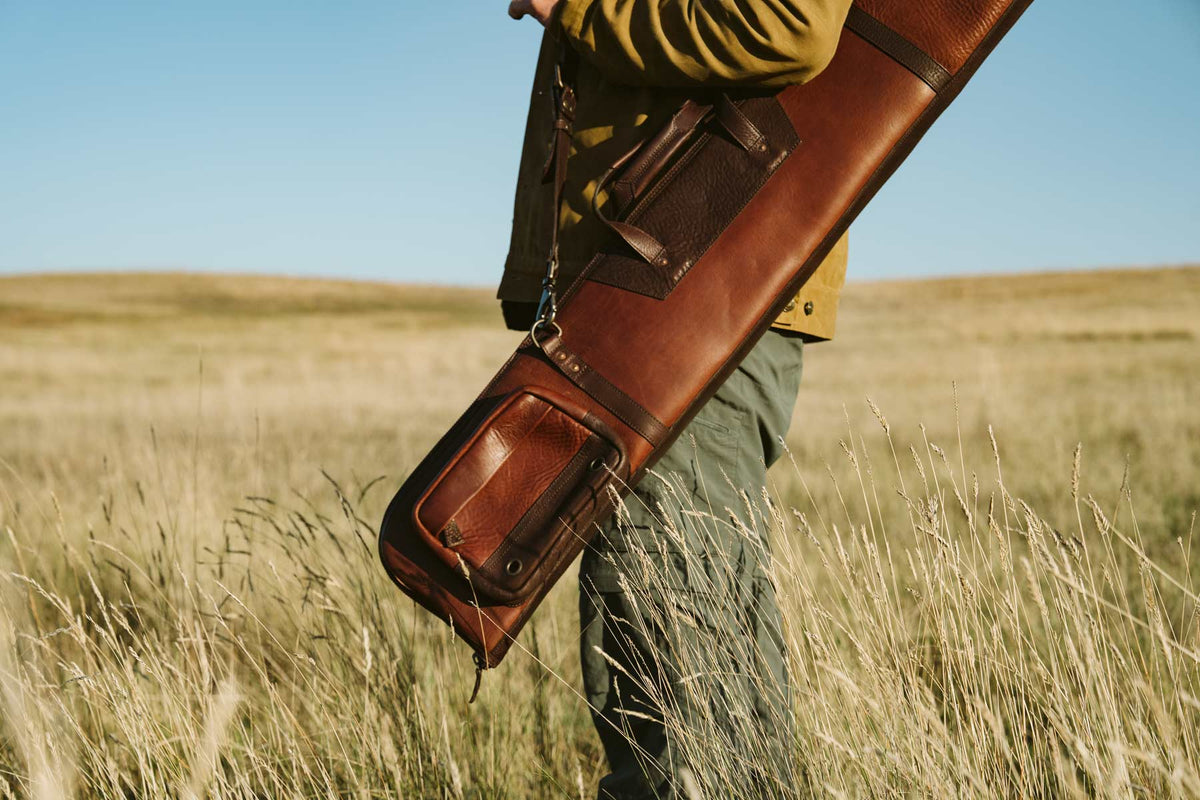
Treat it as loaded, because a surprising number of guns that come out of closets are. Point it somewhere safe, open the action, and look and feel through the chamber and the magazine. If you cannot work the action, or it will not open, stop and take it to a gunsmith exactly as it is.
Old guns that have sat for decades can have live shells swollen in the chamber, corroded firing pins, and springs that have taken a set. None of that is visible from the outside.
This is the part people get wrong, and it is the expensive mistake.
On an old gun, original finish is the value. The thin bluing, the faded case colours, the honest wear on the receiver where a man's hand sat for fifty years: that is the object. A refinished gun is worth a fraction of an original one in the same condition, and there is no undoing it.
So:
What you may do is wipe the metal gently with a soft cloth and a little gun oil, and wipe the wood with a barely damp cloth. That is the whole permitted list until a gunsmith has seen it.
A word on Damascus and twist barrels. Many shotguns made before roughly 1900, and some later, have barrels built from wound strips of iron and steel rather than drawn from solid steel. They are beautiful and they were entirely adequate for the black powder loads of their day. Modern smokeless shells generate pressures they were never built for. Do not fire a gun with Damascus, twist or laminated barrels with modern ammunition until a competent gunsmith has examined and measured it. This is not caution for its own sake. People are injured by this every year.
You will want this for insurance, for the family record, and because it is genuinely interesting.
Photograph, in good light: the whole gun from both sides, the top of the barrels or rib, the receiver flats, the underside of the barrels where proof marks usually sit, the butt plate, and the serial number. Do not clean anything to make the marks legible. Light at a low angle will do it.
What you are looking for:
Most manufacturers' serial records exist somewhere, and the collector associations for the big American names are generous with help. A factory letter, where one is available, is worth having and worth keeping with the gun.
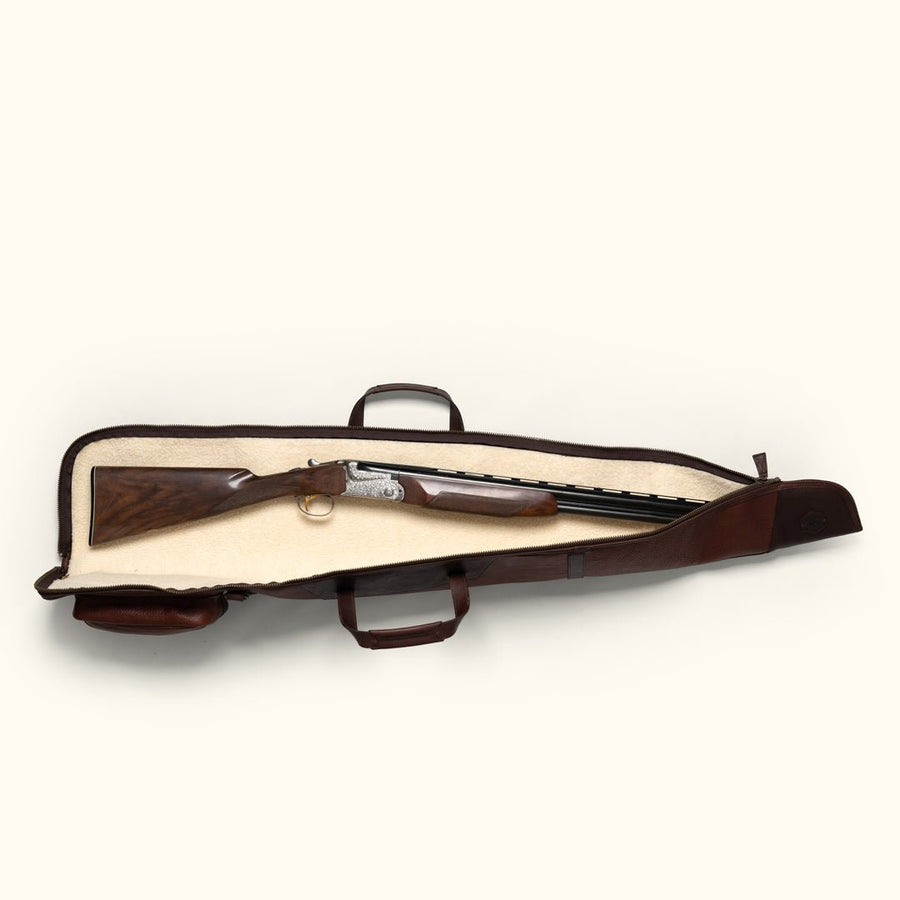
The gun will outlast everyone who remembers it. The story will not, unless somebody writes it down, and almost nobody does.
Sit with whoever is still around and get it on paper or on a voice memo while you can. Who bought it and roughly when. What they shot with it and where. The dog. The one about the flooded corn. Whether it was ever lent, sold, bought back. Any work that was done to it and by whom. Who it went to next and why.
Keep that with the gun. Not in a drawer somewhere else in the house, and not only on a phone. A printed page in the case, in a sleeve, travels with the object and survives the technology.
Add to it as it changes hands. Two generations of that and you have something no auction house can supply.
Inheriting a firearm is not the same everywhere, and this is the one area where guessing is a genuinely bad idea.
In broad terms, federal law makes allowance for the transfer of a firearm by bequest or intestate succession, and a direct inheritance is treated differently from a sale. But a great deal sits on top of that:
This is a description of how the landscape looks, not legal advice, and I am not a lawyer. Talk to an attorney in the relevant state, or to a good local FFL who does estate transfers regularly. Both are inexpensive next to getting it wrong.
Everything that ruins an old gun in storage is moisture, and almost all of it is avoidable.
And leave the chamber empty. That should not need saying, and it does.
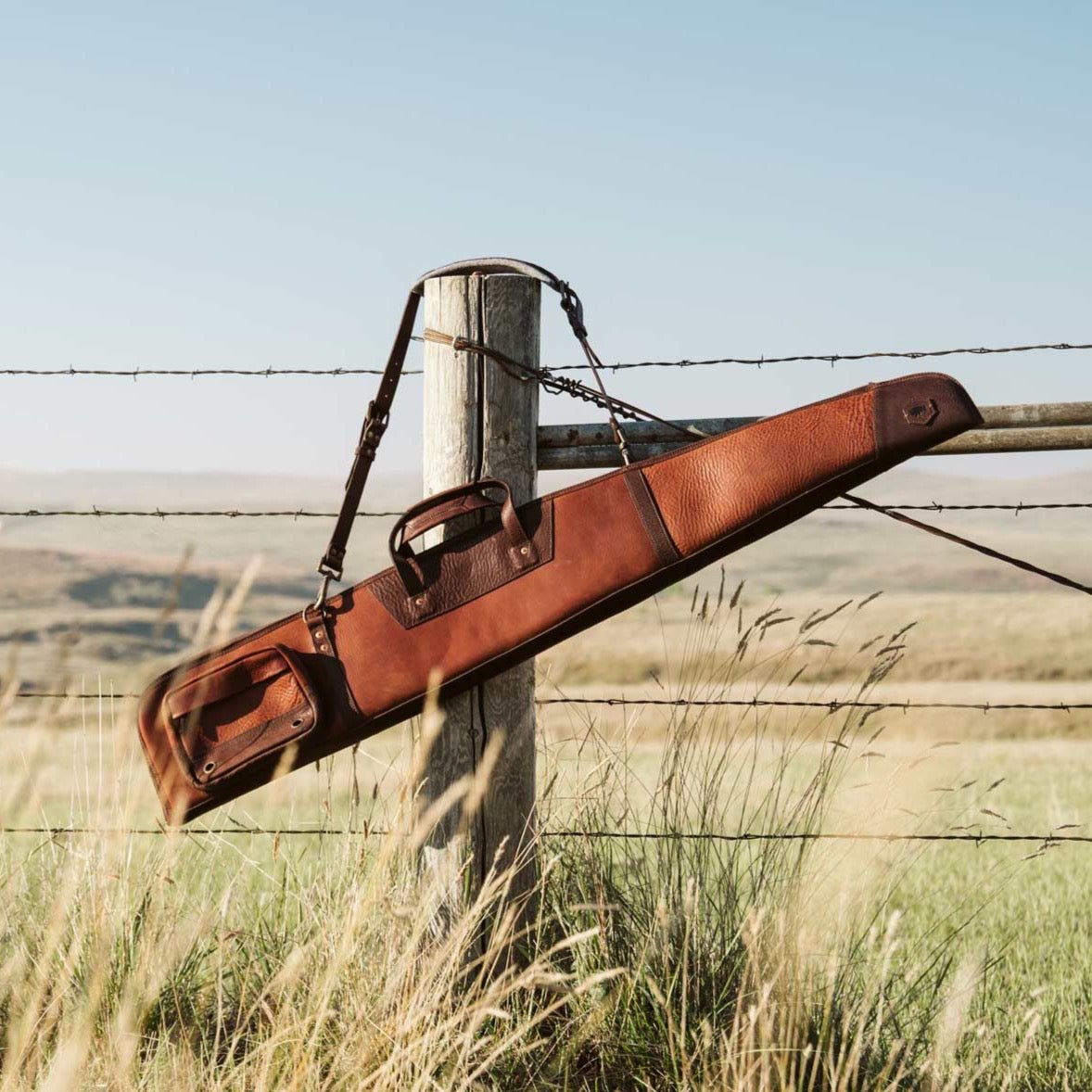
I build these for a living, so read the next few lines knowing that.
When a gun is handed down, it is almost always handed down in whatever it happened to be sitting in. That is usually a nylon sleeve from a hardware store with a broken zipper, and it says something about how the object was regarded, whether anybody meant it to or not.
A case is the cheapest part of the whole arrangement and the only part you get to choose. If you are giving a gun to somebody, give it in something built to the same standard as the gun.
The difference is not padding. It is which parts can be replaced and which parts take the load.
Put plainly: a forty-five dollar synthetic case replaced every three seasons over forty years costs roughly what one good leather case costs, and at the end of it you have nothing to hand anybody. The leather one is the only version of that arithmetic that produces an object.
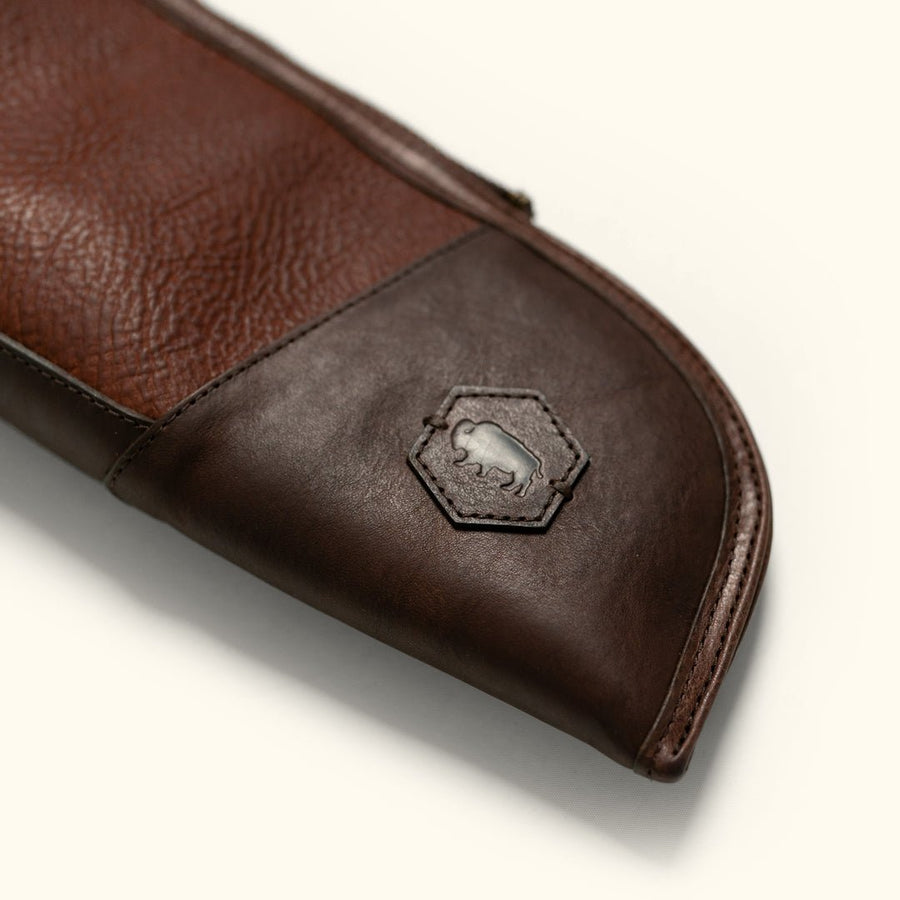
Initials blind-embossed into the leather, without ink or foil, are the only form of personalisation I would put on a case meant to last. They darken with the rest of the hide and they look better at thirty years than at thirty days. Foil stamping wears off unevenly. Screwed-on brass plates work loose and leave holes. Anything dated or referencing an occasion narrows the object to one moment, when the point of it is to keep going past several.
Not because the case protects the gun, though it does. Because the case is the first thing the person opens, and it tells them what they have been given.
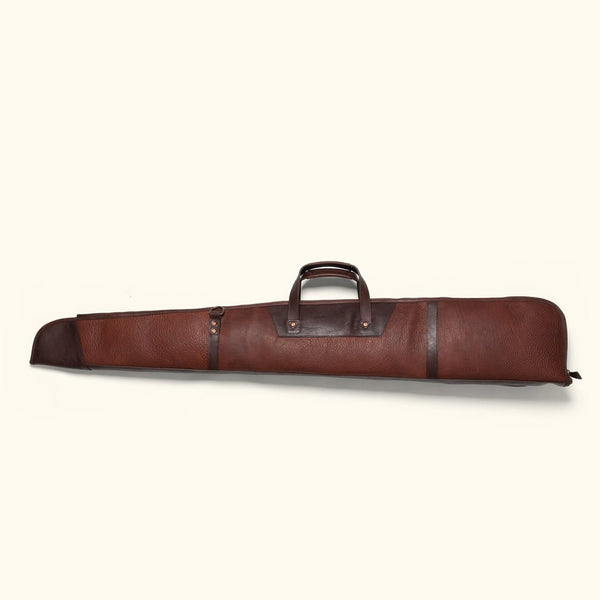
Full grain leather, sherpa lined, antique brass YKK zipper, copper rivets at the stress points. Fits a shotgun to 50 inches. $649.95
See the leather caseConfirm it is unloaded, handling it as though it is not. Do not clean or restore anything. Photograph it and record the maker, serial number and any proof marks. Have a gunsmith inspect it before it is ever fired, and check your state's rules on transfer before it moves.
Almost never. Original finish is most of what an old gun is worth, and refinishing, rebluing, polishing or sanding the stock destroys that permanently. Mechanical repairs by a competent gunsmith are a different matter and are usually worth doing. Cosmetic restoration is not.
Only after a gunsmith has inspected it. Check chamber length before anything else, since many older guns have 2½ inch chambers and will accept a longer modern shell that overpressures them. If the barrels are Damascus, twist or laminated, do not use modern smokeless ammunition until the gun has been examined and measured.
Start with the maker's name and address and the serial number. Proof marks on European guns encode a date and a pressure rating. For American makers, serial number records held by collector associations and, where available, a factory letter will usually date it. Photograph the marks rather than cleaning them to read them.
It depends on the states involved and what the firearm is. A direct bequest is treated differently from a sale under federal law, but if the gun and the heir are in different states the transfer may need to go through a licensed dealer, and several states add their own requirements. Speak to an attorney or an FFL who handles estates. This is not legal advice.
Out of any case, in a cabinet or safe with air circulation, in a lived-in room rather than a garage or basement. Use a dehumidifier rod or desiccant in humid climates, keep a light film of oil on the metal, and take it out to look at twice a year.
A written record of who owned it, what they shot with it and where, any work done to it and by whom, and how it came to you. Add any factory letter or provenance documents. Keep the printed page with the gun rather than in a drawer elsewhere, and add to it each time it changes hands.
A case is the cheapest part of the arrangement and the part you control. A lined full grain leather or heavy waxed canvas case protects the finish in transport and, when the gun is handed on, signals how the object was regarded. Just do not store the gun in it.
A shell that ages rather than degrades, which means full grain leather or waxed cotton rather than polyurethane-backed synthetic; a zipper that a cobbler can replace; strap anchors riveted rather than stitched to the shell; an absorbent or fast-drying lining instead of closed-cell foam; and a doubled muzzle end, since that is the corner that wears through first.
Blind embossing, with no ink or foil, is the only marking worth putting on a case intended to last. It darkens with the leather and looks better at thirty years than new. Foil wears off unevenly, screwed brass plates work loose and leave holes, and dates or occasions tie the object to a single moment rather than letting it carry on.
Xan Hood founded Buffalo Jackson Trading Co. in 2009 and has spent the years since working with leather makers in Mexico and India on bags, outerwear and sporting goods. Nothing here is legal advice or a substitute for a gunsmith's inspection.