
Close
CART (0)
Field Notes · Materials
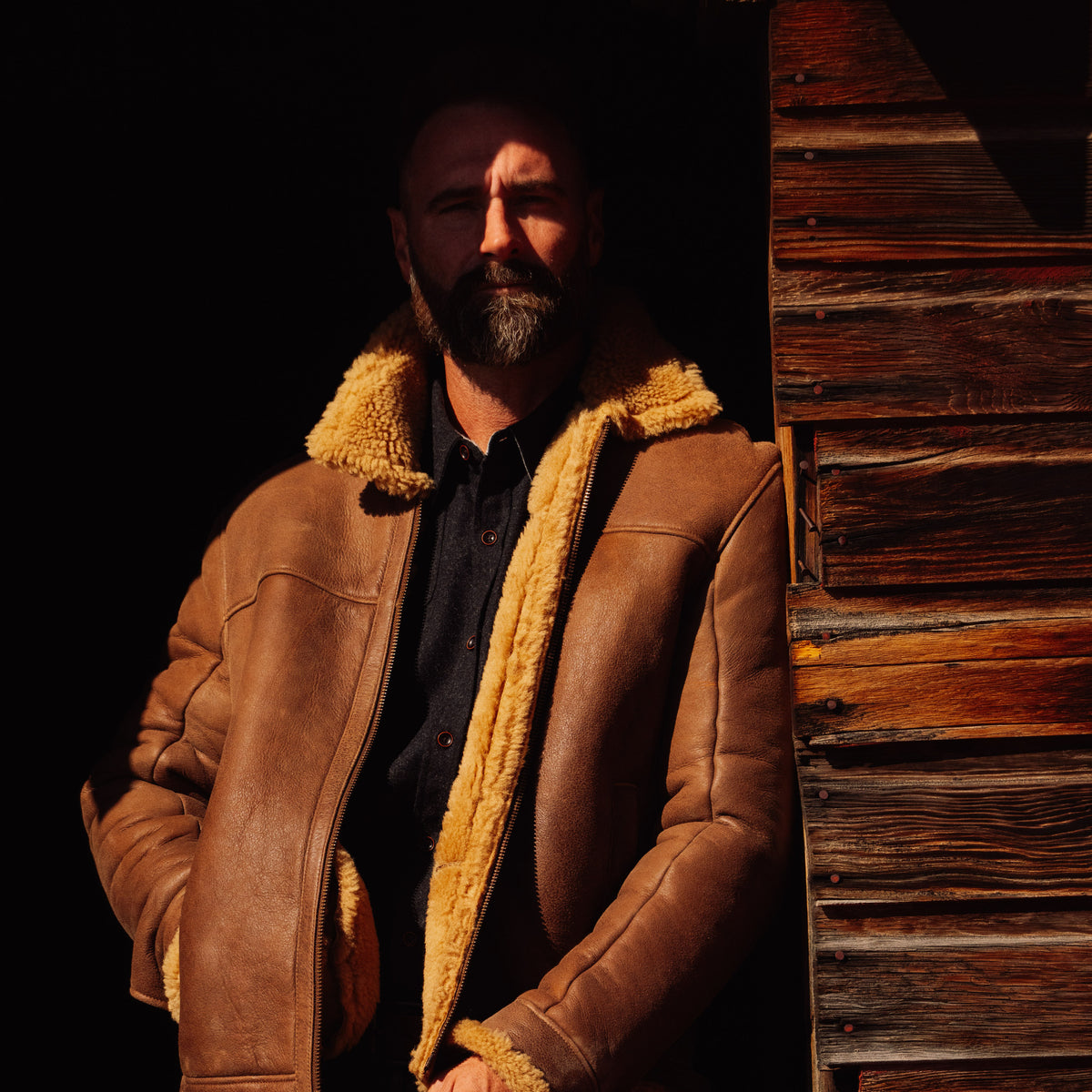
Down is warmer for its weight in still, dry cold. That is why it owns the backcountry and the expedition gear. Shearling is the warmer jacket in the weather most of us actually live in: wind, damp air and long hours outside. The hide stops the wind on its own, and the wool keeps insulating when it picks up moisture, where down goes flat.
If you are standing outside all day, working around a fire or walking into the wind, choose shearling. If you need a jacket to stuff in a pack, choose down.
Many customers wonder if what feels like one layer can actually insulate as strong as a packed down coat. It's a fair question. A good down jacket weighs almost nothing and feels like a sleeping bag. A shearling bomber is heavy, and people assume heavy means old-fashioned.
The honest answer is that the two materials are warm in different ways, and which one keeps you warmer depends on where you'll be wearing it.
Down is the soft under-plumage of ducks and geese. Each cluster lofts up and traps air, and a jacket full of clusters is a thick layer of still air around your body. Down has no strength of its own, so it is always sewn inside a nylon or polyester shell, and the shell does the job of keeping wind and weather out.
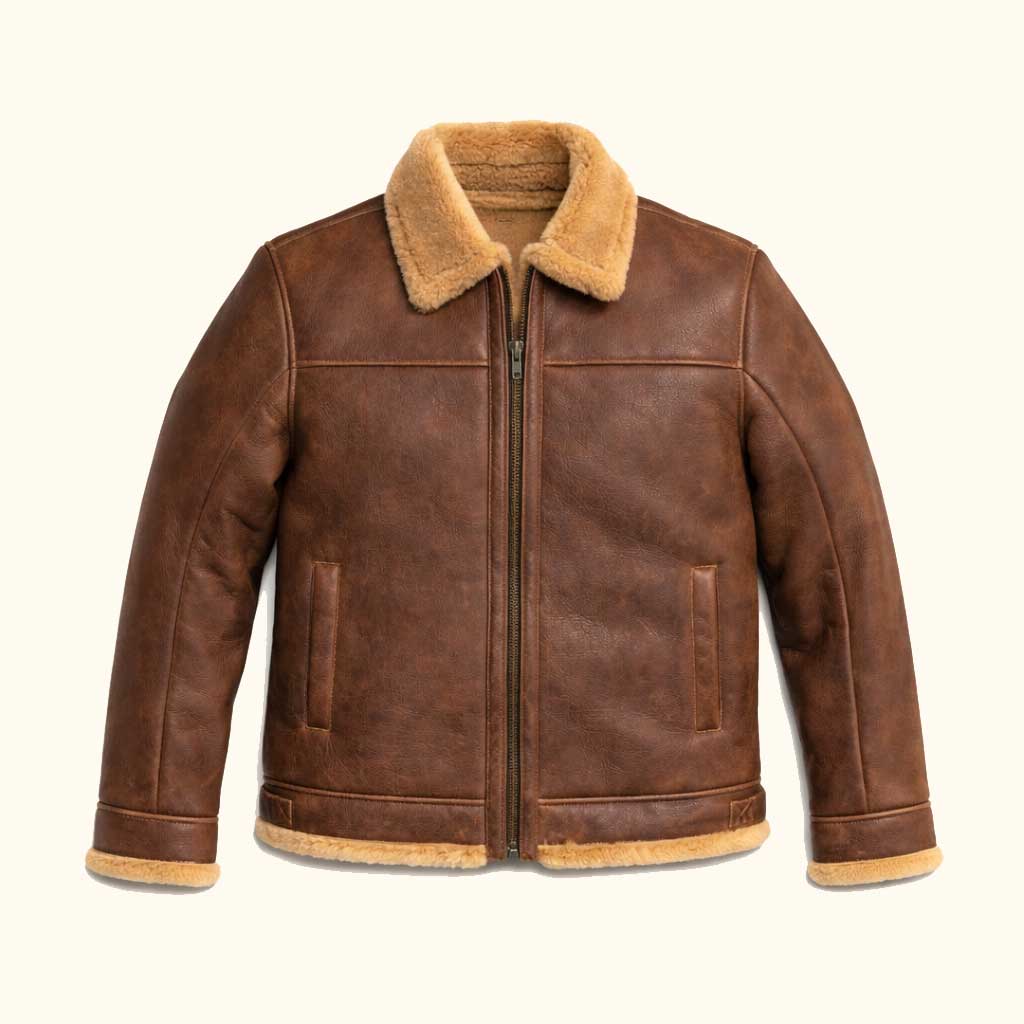
Shearling is sheepskin tanned with the wool left on. The wool is crimped and packed densely on the hide, which traps still air the same way down does. The difference is that the hide is part of the material. The leather side is the shell and the wool side is the insulation, in one piece.
Wind is what makes a cold day feel brutal. It strips away the warm layer of air your body builds up, and no insulation works if moving air gets through it.
A down jacket is only as windproof as its shell fabric. Some shells are excellent and some are thin, and the stitched baffles that hold the down in place are a weak point where cold air can push through. Leather is dense enough to block wind by itself. That is the main reason a shearling jacket feels warmer than its thickness suggests when you step out into a cold wind.
This is where the two materials split most clearly. Down only works when it lofts, and water collapses the clusters. REI notes that down doesn't retain warmth when wet, and Columbia makes the same point: down stops insulating once wet and takes a long time to dry. Sweat counts too, which matters if you're working hard in a down jacket.
Wool handles moisture differently. It can absorb up to 35 percent of its own weight in moisture vapor before it feels wet, according to The Woolmark Company, so it keeps insulating in damp air, in wet snow and through a sweaty afternoon. The lanolin in the wool also helps snow and light rain bead off the outside.
Water resistant is not waterproof. Shearling handles snow and light rain well, but a real soaking needs to dry slowly at room temperature, away from heat. Our shearling care guide covers what to do.
There is no contest here. Down has the best warmth-to-weight ratio of any insulation, and a down jacket compresses into a stuff sack. A shearling jacket is heavy and takes up a suitcase. If you are backpacking, climbing or flying with one bag, buy down.
For everyday wear, the weight turns out to matter less than people expect. Most of our customers say the weight is part of what they like about it.
A down jacket wears out slowly. The shell abrades, seams leak feathers and the down loses loft over years of compression and washing. A well made one might give you five to fifteen winters.
Good shearling softens and molds to you instead of wearing out. With basic care it lasts for decades, and it is one of the few jackets people pass down. Wool is also naturally flame resistant, where nylon shells melt, which is worth knowing if you spend evenings around a campfire or a wood stove.
| Shearling | Down | |
|---|---|---|
| Warmth for its weight | High | Highest |
| Wind | Blocks wind on its own | Depends on the shell fabric |
| Damp and wet | Keeps insulating when damp; water resistant | Loses warmth when wet; slow to dry |
| Indoors and out | Comfortable across a wide range | Can overheat indoors |
| Packability | Heavy, doesn't compress | Very light, packs small |
| Near a fire | Flame resistant | Shell melts |
| Lifespan | Decades | 5 to 15 years |
| Typical price | $700 to $1,500+ | $150 to $800 |
Lifespans and prices are typical ranges, not guarantees.
For the coldest days, the two work well together: a thin down or wool layer under a shearling jacket gives you the loft of down with the wind protection of the hide.
"As soon as you put it on you know how warm it is for how light it is. Bought one for a friend that has a house in Colorado a week after I got mine."
Cameron B., verified buyer, Shearling Leather Bomber Jacket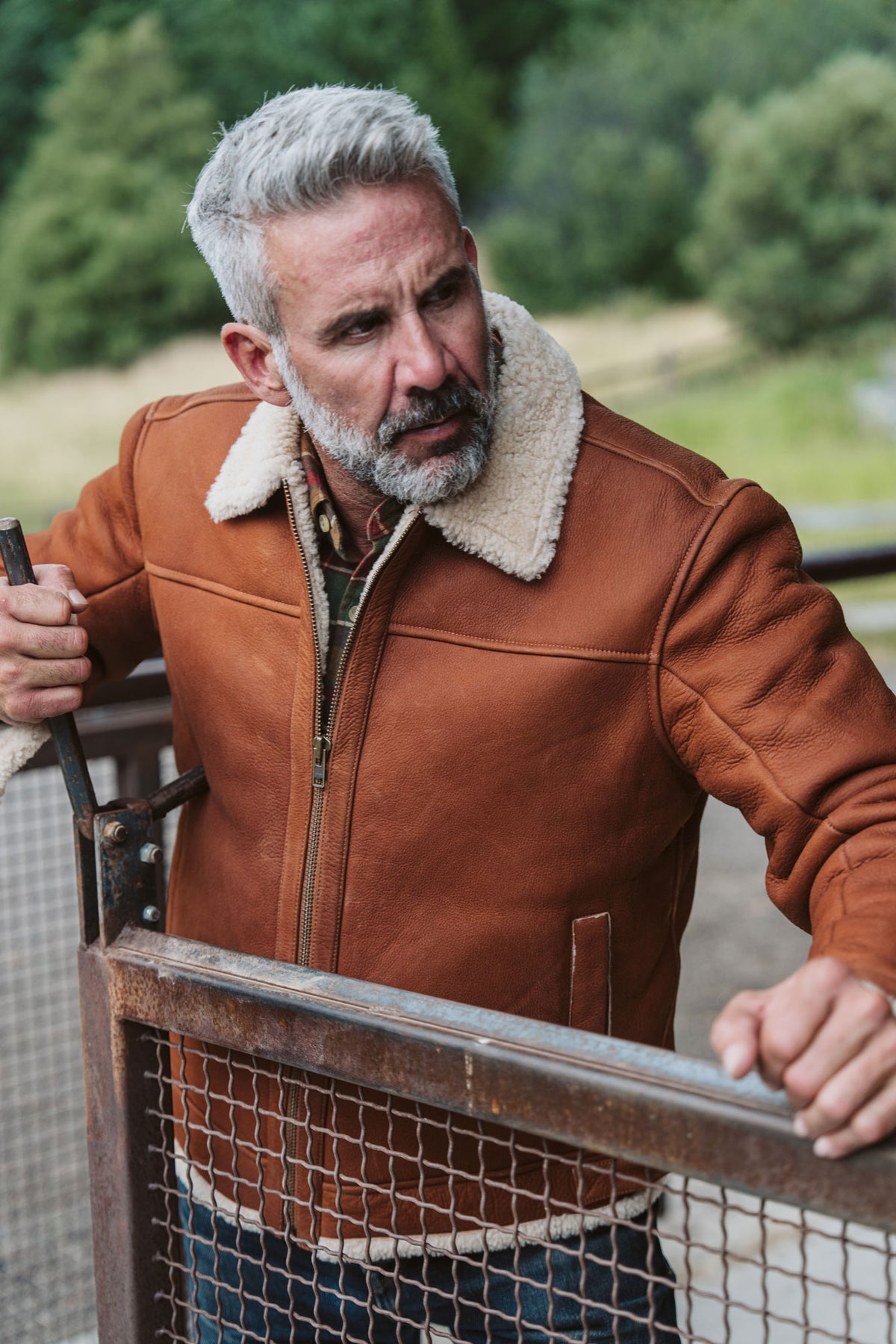
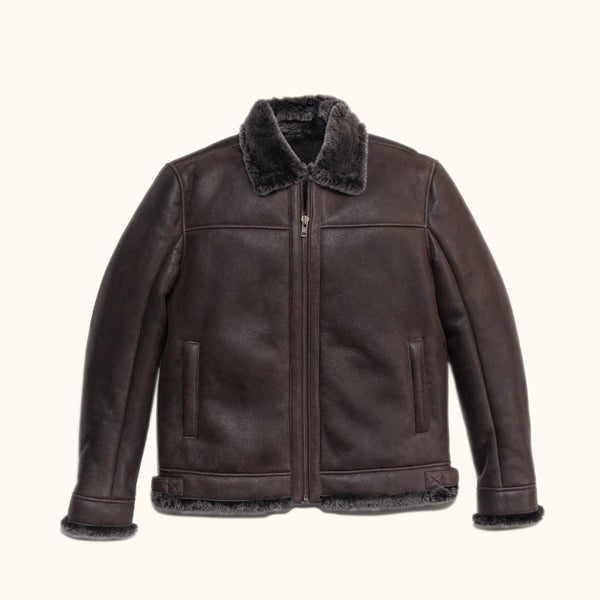
Bombers, blazers, a barn coat and vests, all merino sheepskin tanned in Turkey. Start with the Grizzly Brown Shearling Bomber. From $549.95
Shop men's shearling jacketsDown is warmer for its weight in still, dry cold. Shearling is usually the warmer jacket in wind and damp weather, because the hide blocks wind on its own and the wool keeps insulating when it picks up moisture.
Yes, especially extreme cold with wind, or long hours standing outside. For dry, extreme cold where weight and packing matter, such as mountaineering or backpacking, down is the better choice. For the coldest days, a thin down or wool layer under shearling works well.
Wool can absorb a large amount of moisture vapor before it feels wet, so shearling keeps insulating in damp air and wet snow. Down loses most of its warmth when it gets wet. Shearling is water resistant, not waterproof, so let a soaked jacket dry slowly away from heat.
Yes. Down has the best warmth-to-weight ratio of any insulation and packs small. Shearling is heavier and doesn't compress, which matters for travel but less for everyday wear.
Shearling. A well made shearling jacket lasts for decades with basic care, while a down jacket typically gives five to fifteen years before the shell wears and the down loses loft.
Shearling. When you aren't moving, blocking the wind matters most, and leather does that without a separate shell.
Xan Hood founded Buffalo Jackson Trading Co. in 2009 and has spent the years since designing leather bags, jackets and the everyday gear a man carries, driven by a passion to see men come alive in the outdoors. He writes about the craft behind that gear and the wild places it's made for.