
Close
CART (0)
Field Notes · How It's Made
Buffalo Jackson is designed in Matthews, North Carolina, and handcrafted by artisans around the world: cut and sewn in León, Mexico and India's leather centers, with shearling tanned in Turkey and leather belts being made in the USA. Every style is drawn, specified and sampled here, and I choose the leather, approve the samples and look over the finished goods myself. We make where the hides, the tanneries and the skilled hands are, and we stay close to the work.
People ask me where our goods are made more than almost anything else. It is a fair question, and it deserves a straight answer instead of a vague line about "globally sourced materials."
So here it is: where each piece comes from, why we make it there, how the hides are chosen, and what I actually do between the sketch and your front door.

Leather has never been a product you can make just anywhere. It gathers where three things meet: a steady supply of hides, tanneries that know how to turn them into good leather, and generations of cutters and stitchers who know what to do with it. Italy has Tuscany. The world's boot trade has León. India has whole cities built around the craft.
When I started Buffalo Jackson in 2009, I could have made everything in one place and called it simple. Instead, we went to the places that do each thing best. Heavy bags and waxed canvas to the workshops that have done it for generations. Leather jackets and garment leather to the countries that tan and sew more of it than almost anyone. Shearling from the skins that have the density and hand we want.
That is not the cheapest way to do it. It means more suppliers, more samples, more travel and more time on the phone at odd hours. But it is the way to get the leather right.
| What we make | Where it is made | What it is made from |
|---|---|---|
| Leather jackets | Partner workshops in India | Full-grain and top-grain cowhide and lambskin |
| Shearling jackets and coats | Partner workshops in India | Sheepskin shearling tanned in Turkey |
| Roosevelt bags | Partner workshops in India | Water buffalo leather |
| Jefferson and Walker bags | Partner workshops in India | Full-grain leather |
| Dakota bags, cases and wallets | León, Mexico, and India | Waxed canvas and full-grain leather |
| Leather belts | USA | Full-grain leather |
| Design, specs, leather selection, samples | Matthews, North Carolina | Every style, every season |
Each product page lists its own country of origin, so you can always check the piece in front of you.
León was founded in 1576, and the country around it has been ranching cattle and horses for most of the centuries since. Where there are cattle, there are hides, and where there are hides, sooner or later there are tanners, saddlers and bootmakers. León became all three.
Today it is the center of Mexico's leather trade. By one count, about 70 percent of the shoes made in Mexico come from León, and the state of Guanajuato's leather chain runs to nearly 5,000 companies: tanneries, hardware suppliers, cutting rooms and finishing shops, many of them within a short drive of each other. The city is known for heavy construction, high stitch counts and Goodyear-welted boots, the kind of work that takes a trained hand.
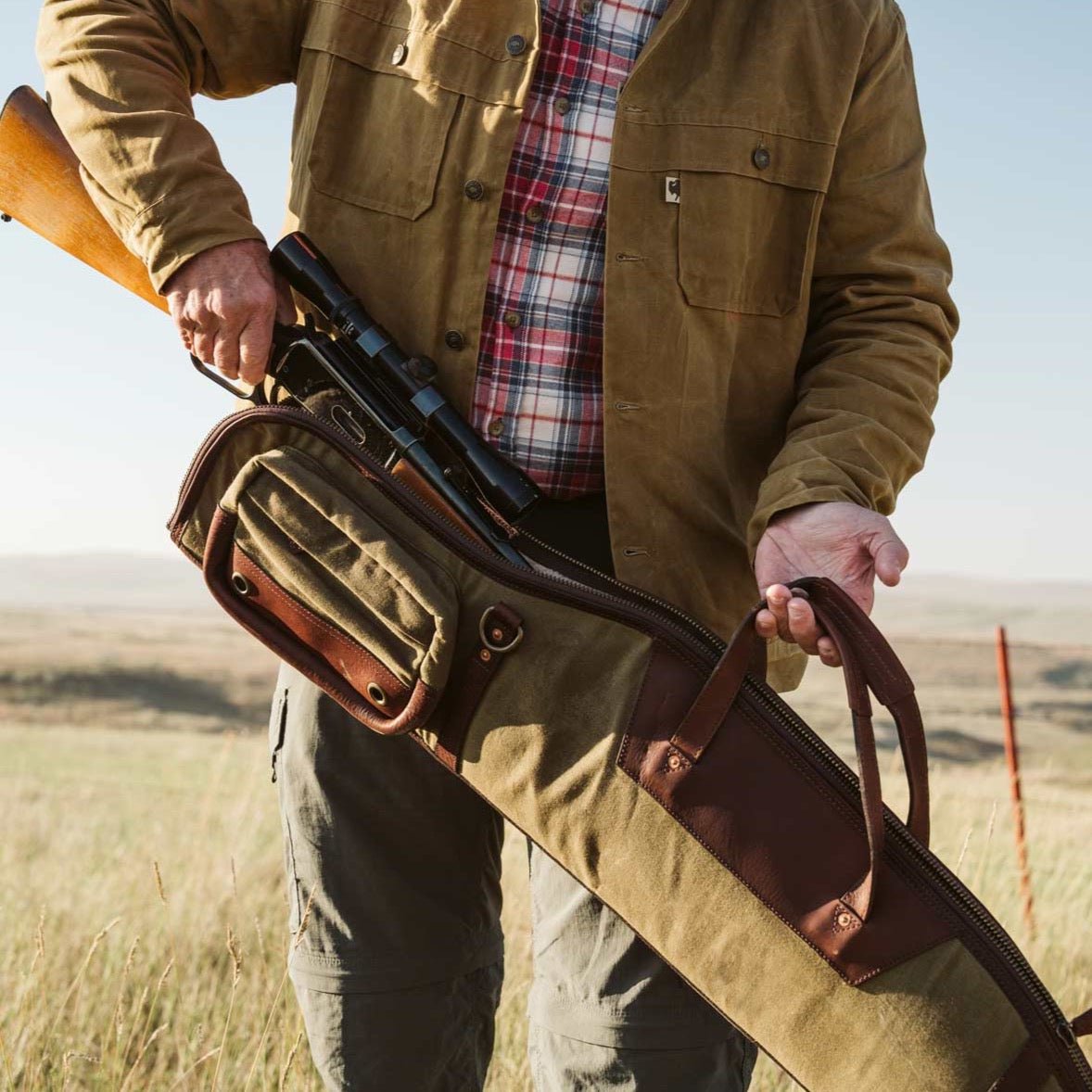
That is why our Dakota waxed canvas and leather goods were built there. Heavy canvas, thick harness-weight leather and riveted stress points are what León's workshops do best.
India accounts for about 13 percent of the world's leather production, is home to roughly a fifth of the world's cattle and buffalo, and is the world's second largest exporter of leather garments. The industry is organized into clusters, each with its own specialties: Chennai, Ambur, Ranipet and Vellore in Tamil Nadu; Kanpur, Agra and Noida in Uttar Pradesh; Kolkata in West Bengal. Some of the best-known names in fashion have their jackets and bags made in these cities.
Two things make India the right place for much of what we make.
The garment skill. Cutting and sewing a leather jacket is a different craft from building a bag. Panels have to be matched for color and grain across a whole garment, seams have to lie flat, and shearling has to be pieced so the wool runs the right way. India's garment workshops do this at a level few places can match.
The buffalo. Our Roosevelt bags are made from water buffalo leather, and India is where that hide is. Buffalo leather is thicker and more pebbled than cowhide, with a grain that shows its character from day one and darkens beautifully with use. It is the leather the Roosevelt was designed around.

Water buffalo leather, antique brass hardware, made in India and designed in North Carolina.
See the Roosevelt duffleShearling is sheepskin tanned with the wool still on, so the leather and the warmth are one piece. The quality of a shearling jacket is set almost entirely by the skin: how dense the wool is, how even it is across the hide, how supple the suede side feels, and how clean the tanning is.
Turkey has a long tradition of tanning double-face sheepskin, with specialized tanneries in centers such as Çorlu and Gönen. We source our shearling skins from Turkey because they give us the density and softness we want, and the skins are then cut and sewn into finished jackets by our garment partners.
I inspect the shearling myself. Skins vary, even from the same tannery and the same lot, and a jacket is only as good as its weakest panel.


Some things are best made close to home. We are bringing our leather belts to American workshops, cut from full-grain hides and finished by hand. A belt is a simple object, and that is exactly why the leather and the edge work have to be right.
You can have the best workshop in the world and still make a poor jacket from a poor hide. Most of the quality in a leather piece is decided before a single cut is made.
Here is what we look at when we choose leather:
Nothing we sell starts in a factory catalog. Every style is designed here, in our office in Matthews. We write the spec sheets: the leather, the weight, the hardware, the lining, the stitch, the measurements down to the quarter inch.
Then the samples come back, and the real work starts. A fit model tries on every jacket sample. We mark it up, send it back and ask for another one. A pocket gets moved half an inch. A sleeve gets longer. A zipper gets swapped for a better one. Some styles take three or four rounds before I will sign off. Some never make it at all.
Our partner workshops know that a Buffalo Jackson sample will come back with notes. That is the relationship, and the good ones respect it.
Buffalo Jackson is not run by 400 people in a corporate office. It is a small team, and every one of us is involved in the details. Mine are these: I select the styles. I choose the leather. I inspect the shearling, skin by skin. When a shipment lands, I am in the warehouse going over the product, and when something is not right I go back to the workshop and I do not sign off until it is. I am at the photo shoots, because how a jacket is shown matters too.
Details matter to me because this is my name on the label, and I intend to be answering for it for a long time.
A rancher looks after his horses, his cattle and his land. Nobody has to tell him to. That is his livelihood, and he will be standing on the same ground next year and the year after. He checks the fence line because he knows what happens if he does not.
This business is the same for me. The artisans in León, India, Turkey and here at home are part of my herd. The leather is my land. And you, the customer, are the reason any of it is worth doing. I check the fence line because I care what shows up at your door.
Less than most people think, and more than some brands want you to know.
Country of origin tells you where the needle went in. It does not tell you how good the hide was, how carefully the panels were matched, or whether anybody looked at the finished piece before it shipped. Some of the finest leather in the world comes out of León and India. So does some of the worst. The difference is the standard, and whether somebody is holding the workshop to it.
That is why I would rather tell you plainly where we make things and how we watch over it than hide behind a vague label. Ask any brand where its goods are made and who checks them. The good ones will tell you. The best will give you a name.

How Buffalo Jackson started in a Colorado garage in 2009, and what we are still building.
Our storyBuffalo Jackson is designed in Matthews, North Carolina, and handcrafted by artisans around the world: cut and sewn in León, Mexico and India, with shearling tanned in Turkey and leather belts being made in the USA. Each product page lists that item's country of origin.
Every Buffalo Jackson product is designed, specified and quality-checked in Matthews, North Carolina, and its leather belts are being made in the USA. Its jackets and bags are handcrafted by partner artisans in León, Mexico and India, with shearling tanned in Turkey. Each product page lists its country of origin.
Yes. Buffalo Jackson uses real full-grain and top-grain leather, including cowhide, lambskin, water buffalo leather and sheepskin shearling, along with waxed canvas on some bags. It does not use bonded leather. The specific leather for each item is listed on its product page.
Buffalo Jackson's shearling skins are tanned in Turkey, which has a long tradition of tanning double-face sheepskin. The skins are cut and sewn into jackets by partner workshops in India, and the founder, Xan Hood, inspects the shearling himself.
Buffalo leather, as used in Buffalo Jackson's Roosevelt bags, is made from water buffalo hide. It is thicker and more pebbled than cowhide, very durable, and develops a rich patina with use. India, with roughly a fifth of the world's cattle and buffalo, is a major source.
León, in the state of Guanajuato, grew up around centuries of cattle and horse ranching. It is now the center of Mexico's leather industry, producing about 70 percent of the country's shoes, with nearly 5,000 companies in the state's leather chain. It is known for heavy construction and Goodyear-welted boots.
It can be excellent. India produces about 13 percent of the world's leather and is the second largest exporter of leather garments, and many well-known fashion brands manufacture there. As anywhere, quality depends on the hide chosen, the workshop, and how closely the brand checks the work.
Every Buffalo Jackson style is designed in Matthews, North Carolina. The team writes the specifications, chooses the leather and hardware, and revises samples with a fit model until they are right. The founder, Xan Hood, selects the styles and signs off on every sample.
Yes. Xan Hood, who founded Buffalo Jackson in 2009, selects the styles, chooses the leather, inspects the shearling, reviews production with the workshops, goes over shipments in the warehouse and attends the photo shoots.
Less than most people think. Country of origin tells you where a jacket was sewn, not how good the hide was or whether anyone checked the work. Excellent and poor leather goods come from the same countries. The better question is what standard the brand sets and who holds the workshop to it.
Xan Hood founded Buffalo Jackson Trading Co. in 2009 and still runs it from Matthews, North Carolina. He works directly with leather artisans in Mexico, India, Turkey and the USA on bags, outerwear and sporting goods, and writes about how the things we carry are actually made.