
Close
CART (0)
Field Notes · Buying Guide
Choose shearling in this order. First make sure it is real sheepskin, with wool growing out of a hide rather than a fabric backing. Then pick the style for your winter: a waist-length bomber or trucker for driving and everyday wear, a hip-length blazer or barn coat for real cold, a vest for mild days and layering. Then get the fit right: close through the body with room for one sweater, shoulder seams at the edge of your shoulder, sleeves to the wrist bone.
Dense, even merino wool on a supple hide, clean seams and heavy hardware are what separate a twenty-year jacket from a three-year one. Expect to pay roughly $700 to $1,500 for a well made one. Much under $400, it isn't real shearling.
A shearling jacket is one of the few things in a closet worth spending real money on, and one of the easiest to get wrong. The label says "shearling" on everything from a $2,500 Italian coat to a $79 polyester jacket, and a photo can't tell you which is which.
This is the checklist I use when we develop a jacket and the one I'd hand a friend who was buying one from anybody. It also folds in our old guide to choosing shearling by season.
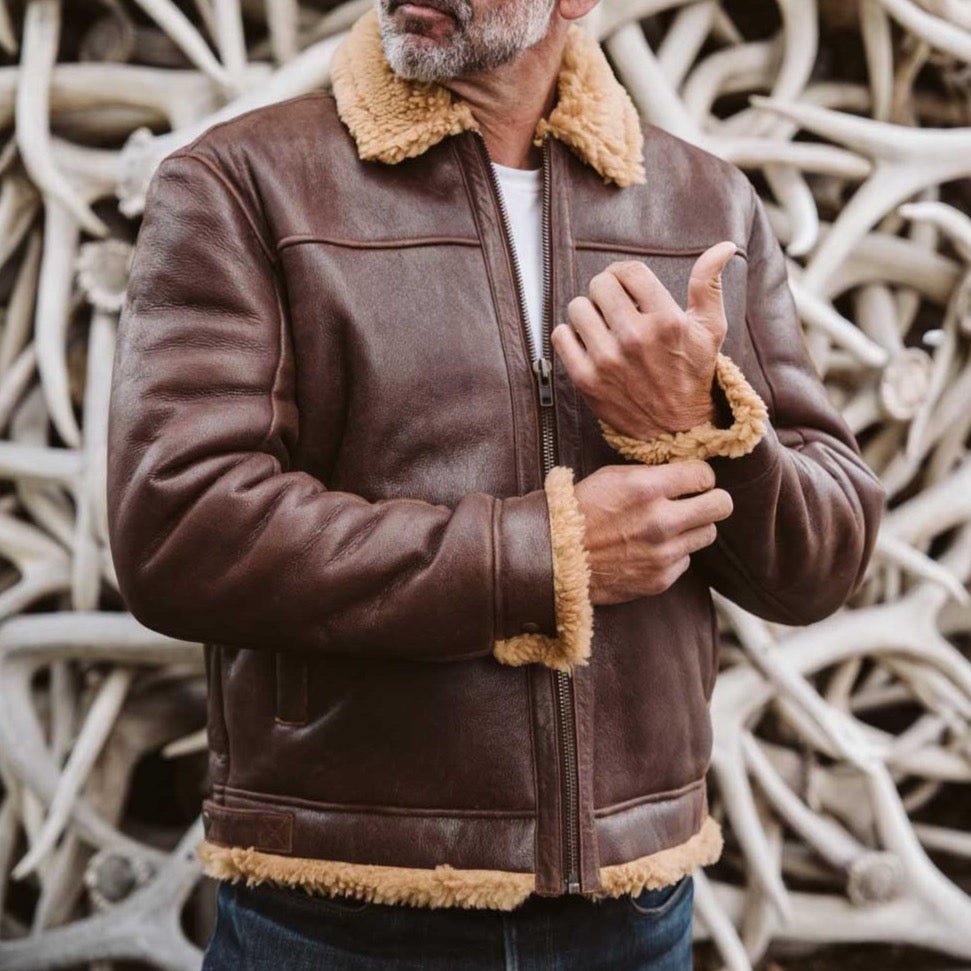
Everything else is secondary. Real shearling is a sheepskin tanned with the wool on. Faux shearling and sherpa are polyester or acrylic pile knit onto a fabric backing.
Our full guide to shearling vs. sherpa goes deeper, including the burn test.
Not all real shearling is equal. The breed of sheep and the way the skin is dressed change how the jacket looks, feels and wears.
| Type | Wool | Feel and look | Best for |
|---|---|---|---|
| Merino | Short, very dense, fine, even | Plush and velvety, light for its warmth, tight clean pile | Tailored jackets, bombers, everyday wear |
| Entrefino | Medium length, springy, a little coarser | Classic, hard-wearing sheepskin coat feel | Workwear, rancher and barn coats |
| Toscana | Long, silky, wavy | Dramatic, soft, very fluffy collars and trims | Statement collars and luxury coats |
| Icelandic and similar | Long, shaggy, often two-toned | Rugged and heavy | Deep cold, rustic looks |
For a jacket you will actually wear, merino is the benchmark: the densest, finest and most even wool, with the best warmth for its weight. It is what we use. Our shearling is merino sheepskin tanned in Turkey, one of the oldest shearling tanning traditions in the world.
Every shearling jacket has leather on one face and wool on the other. Which faces out matters.
| Style | Length | Warmth | Best for | Rough comfort range |
|---|---|---|---|---|
| Shearling vest | Hip | Core only | Layering, fall days, driving, ranch work | 40°F to 60°F |
| Trucker or ranch jacket | Waist to hip | High | Everyday wear, western style | 15°F to 45°F |
| Bomber (B-3 style) | Waist | Very high | Cold, windy days, driving, everyday wear | 10°F to 40°F |
| Blazer or car coat | Hip to upper thigh | Very high | Town, office, over tailoring | 5°F to 40°F |
| Barn or rancher coat | Hip to thigh | Highest | Deep cold, open country, long days outside | Below 0°F to 35°F |
Those ranges assume a shirt and sweater underneath and are only a starting point. Wind, humidity and how cold you run all matter. Longer coats hold more heat because they cover your hips and lower back, and a high collar you can turn up does more for warmth than most people expect.
Go for the most wool you can wear comfortably: a bomber, a blazer or a barn coat, with a collar that closes at the throat. Darker colors hide road salt and slush. This is the season shearling was made for.
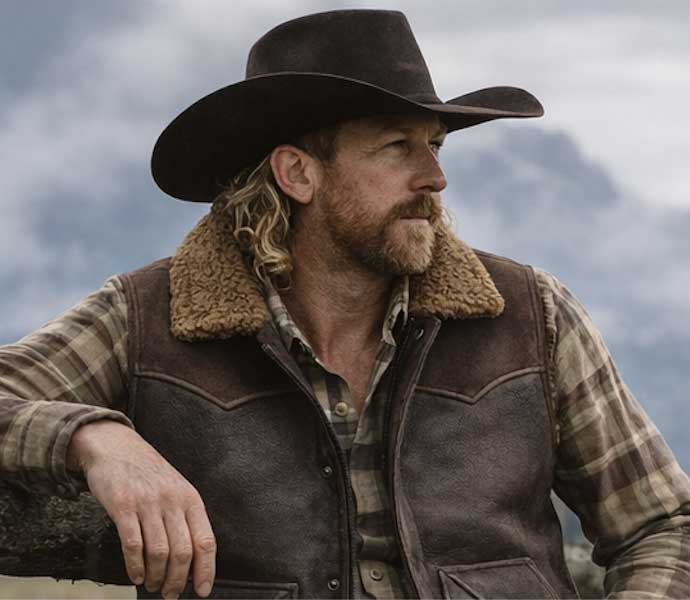
Transitional weather calls for less jacket. A shearling vest over a flannel, or a leather jacket with a shearling collar, gives you warmth where it counts without overheating at midday. A bomber worn open works on cold mornings.
Early spring cold snaps are still shearling weather. A lighter trucker-length jacket or a vest carries you through. Once it's regularly above 50°F, switch to an unlined leather jacket and put the shearling away properly for summer.
Summer isn't shearling season, except for mountain evenings, high-altitude trips and hunting camp. A vest is the one piece that earns its keep year round. The rest of the time, store the jacket clean, dry and in a breathable bag.
Shearling is thick, so it fits differently from an unlined leather jacket. It should trap heat close to your body without binding.
A sizing note from our own reviews: several owners of our shearling bomber and barn coat say they run a little small once a heavy sweater is underneath, and a few went up one size. If you are between sizes, or you plan to layer heavily, size up. Check the size chart on each product page before ordering, and we'll gladly exchange if the fit is off.
| Price, new | What you're usually getting |
|---|---|
| Under $400 | Sherpa, faux shearling, or a real shearling collar on a synthetic-lined jacket |
| $400 to $700 | Shearling vests, lighter real shearling, or lower-grade hides |
| $700 to $1,500 | Well made real shearling jackets and coats from established makers |
| $1,500 and up | Designer labels, Toscana and specialty hides, heavy long coats |
Price is not proof of quality at the top end. It is a pretty good proof of fakery at the bottom. Judge the wool, the hide, the fit and the construction, and think in cost per winter. A $900 jacket worn for twenty winters costs $45 a year.
"Honestly this is one of the rare times when I spent good money on something and it actually lived up to expectations."
Kenneth E., verified buyer, Buffalo Jackson shearling coat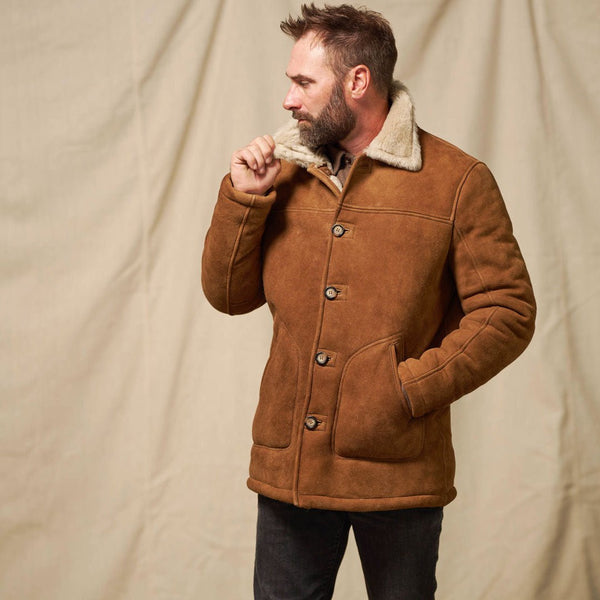
Merino sheepskin tanned in Turkey. Bombers in five colors, the Big Sky Blazer, the Durango Barn Coat, the Jackson jacket and vest. $549.95 to $1,195
Compare the lineConfirm it is real sheepskin, choose a style that matches your climate, and get the fit right: close with room for one sweater, shoulder seams at the shoulder edge, sleeves at the wrist bone. Then check the wool density, the suppleness of the hide, the seams and the hardware.
For most jackets, merino. It has the densest, finest and most even wool, giving the best warmth for its weight and a clean, velvety pile. Toscana is prized for long, silky collars and luxury coats, and entrefino is a hard-wearing classic for workwear.
Close but not tight. There should be room for a sweater or flannel and no more. Too loose and cold air pumps in at the hem. Good shearling relaxes and molds to you over the first season of wear.
If you are between sizes or plan to wear heavy layers, yes. Shearling is thick, and several owners of our bomber and barn coat went up one size to fit a heavy sweater underneath. Check the size chart before ordering.
Leather-out is more practical. The finished leather sheds light rain, wipes clean and resists wear. Suede-out is softer and more traditional looking but marks more easily with water and oil.
Very warm. A shearling bomber is comfortable in most people's winter down to around 10°F with layers, and a longer barn or rancher coat goes colder. The same design kept Second World War bomber crews alive at 25,000 feet.
A hip- or thigh-length shearling barn, rancher or car coat with a high collar. Length matters because covering the hips and lower back holds much more heat.
Roughly $700 to $1,500 for a well made real shearling jacket from an established maker, more for designer labels and specialty hides. New jackets under about $400 are almost always sherpa or faux.
Yes. A shearling vest or a lighter trucker-length jacket works well in fall and early spring. Once temperatures are regularly above about 50°F, switch to an unlined leather jacket.
Decades, with basic care. Keep it away from heat, dry it slowly if it gets soaked, brush it, and store it in a breathable bag. Good shearling softens and improves with age.
Xan Hood founded Buffalo Jackson Trading Co. in 2009 and leads product development on its leather and shearling outerwear, from hide selection to sample fittings. He writes about how to buy things that last.