

Close
CART (0)

A shearling jacket holds up with routine care, not special handling. Brush it after each wear, spot clean stains as they happen, and send it to a specialist once a year for anything deeper. Skip that routine and the wool mats, the suede stiffens, and stains set in for good. None of the steps below are complicated. What matters is doing them on schedule, not waiting until the jacket needs rescuing.
Shearling care differs from standard leather jacket care because it is not one material. The wool needs the kind of gentle handling you would give a sweater, brushing rather than scrubbing, air drying rather than heat. The suede backing needs the handling you would give a leather jacket, kept away from soaking and away from harsh solvents. Treating the whole jacket as if it were only leather, or only wool, is where most damage starts.
No, not the way you would wash a cotton shirt or a wool sweater. Full immersion, hand washing in a basin, or a washing machine cycle soaks the leather backing, and a soaked backing can shrink, stiffen, or crack as it dries. Water belongs in a spot clean, in small amounts on a damp cloth, not in a soak.
If the jacket gets caught in rain or wet snow, shake off what you can before going inside, then lay it flat to air dry away from any heat source. A jacket that gets wet in ordinary weather does not need a specialist visit on its own. A jacket that has been fully soaked or submerged probably does, since water trapped against the leather backing does not dry evenly on its own.
Start outside. Shake the jacket to knock loose dirt free, then brush the wool with a soft-bristle brush made for shearling or suede, working in the direction the wool naturally lies. A stiff clothes brush or a synthetic bristle can wear grooves into the leather backing over time, so the brush matters as much as the technique.
Remember that a shearling jacket is two materials in one garment: a suede exterior and a wool interior, or the reverse on a double-face style. Each side takes different handling in the same cleaning session, so treat them as separate steps rather than one pass.
For a stain, mix a small amount of mild, wool-safe detergent into lukewarm water. Dampen a clean cloth, not soaked, and blot the stain rather than rubbing it. Rubbing pushes the stain deeper into the suede and flattens the wool around it. Test the detergent solution on an inconspicuous area first, such as an inside seam, before treating a visible spot.
Wipe the area again with a second cloth dampened in plain water to lift the detergent residue. Leftover soap dulls the suede and stiffens the wool as it dries, undoing the cleaning.
Lay the jacket flat on a towel to dry, away from radiators, vents, and direct sun. Heat is the main risk at this stage: it dries the suede too fast and leaves it brittle rather than supple. Reshape the jacket while it is still damp, then once it is mostly dry, run your fingers through the wool to loosen the pile back to its natural shape.
For odor between cleans, sprinkle a small amount of baking soda over the wool, let it sit for an hour, then brush it out. Airing the jacket outdoors on a dry day, out of direct sun, handles most everyday odor without any product at all.
Condition the suede side once or twice a year, less often than a full leather jacket needs. The wool's natural lanolin already protects the hide from the inside, so over-conditioning does more harm than skipping a year. Use a small amount of a suede-specific or mild leather conditioner on a soft cloth, work it in, and wipe away anything that has not absorbed after a few minutes.
Do this after every wear that leaves visible dirt, and treat stains the day they happen. Waiting lets a stain set, and a set stain is a specialist job, not a spot-clean one. Keep perfume and hairspray away from the suede directly; the alcohol in both can leave a discolored spot that brushing will not lift.
Not at a standard dry cleaner. The solvents used in conventional dry cleaning strip the natural oils that keep suede supple and can felt the wool, leaving both stiff and rough. A jacket that goes through a standard cycle usually comes back looking and feeling different, and that change does not reverse.
Shearling needs a cleaner who works specifically with fur and shearling, using solvent-free methods built for the material. Ask directly whether they handle shearling regularly, not just leather or standard fur; the two require different chemistry, and a cleaner used to one is not automatically equipped for the other.
This costs more than a standard dry clean and takes longer to get an appointment, since fewer cleaners offer it. It is worth the wait. A bad wash and a bad dry clean cause the same kind of damage, and neither is repairable at home once it has happened.
No, not if it is done on a schedule. The reputation comes from what happens when it is not: dirt ground into the wool over months, stains left to set instead of treated same-day, or a jacket sent through a standard dry clean because nobody checked first. Any of those makes the eventual clean harder and more expensive than routine care would have been.
Treat it as two separate habits rather than one task. Light maintenance, brushing and spot cleaning, happens as needed, sometimes weekly in a dusty or wet season and rarely at all in a dry one. A deeper clean from a specialist happens on its own schedule, roughly once a year, regardless of how the jacket looks at the time. Waiting until it looks dirty means waiting too long, since damage to the suede and wool starts before it is visible.
Store it in a breathable garment bag, cotton or another natural fabric, not plastic. Plastic traps moisture against the wool and suede, and trapped moisture is what causes mildew and odor over a season in storage, not the jacket itself.
Keep it somewhere cool and dry, away from direct sunlight and away from anything that generates heat: a radiator, a heating vent, an attic that gets warm in summer. Heat and UV both dry out the suede over time, the same risk as drying it near a heat source after cleaning. A silica gel packet inside the garment bag helps in a humid climate or a basement storage space.
Give it room. Shearling stores best on a wide hanger with space around it, not compressed between other coats on a full rod. Compression flattens the pile, and flattened wool does not always spring back once the season ends. If moths are a concern, use a cedar block rather than mothballs. The wool is a natural fiber, and cedar does the job without the chemical smell transferring into the jacket.
Anything beyond surface dirt and light spotting goes to a specialist: oil-based stains, anything soaked into the suede rather than sitting on the surface, odor that brushing has not resolved, or a full clean of the whole jacket rather than one spot.
Send it once a year, typically before you put it away for the season, or sooner after any hard use: a wet hike, a spill that soaked in, a stretch of daily wear. That interval, not a one-time deep clean, is what keeps the wool holding its loft and the suede holding its texture across years of regular wear.

Written by
Xan Hood
Founder and CEO of Buffalo Jackson, a heritage leather goods and outerwear brand started in 2009. Xan leads product development personally and writes about full-grain leather, craftsmanship, and heritage apparel from 17 years of firsthand experience.
More about Xan →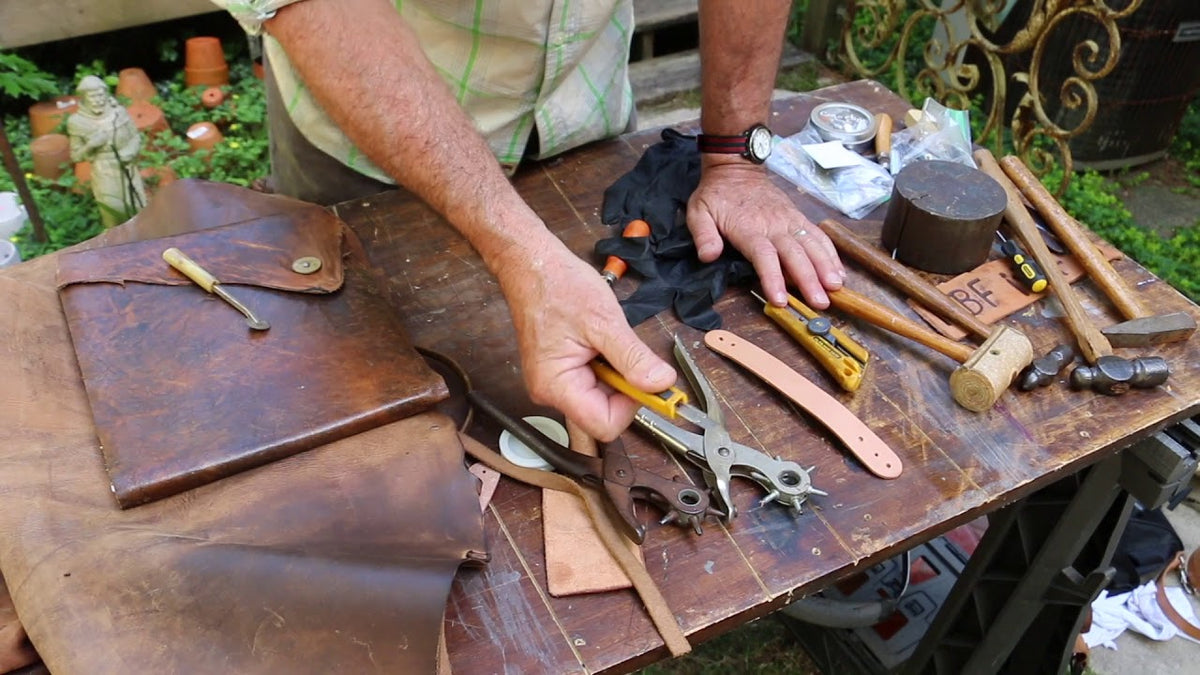
The tools and steps for simple leather bag repairs at home: punching a new strap hole, setting a rivet, slicking an edge, and knowing when to call a pro.
Three things to check before you buy a leather bag: the grade of leather, the hardware, and whether the style fits how you'll use it.

What leather patina is, what causes it, and 6 steps to develop a rich patina on full-grain leather, with our video.