
Close
CART (0)

Buffalo Jackson Journal — Men’s Style Guide
The short answer is yes. The longer answer involves Marlon Brando, Steve McQueen, and a jacket made from full-grain sheepskin.
It started with Marlon Brando leaning against a Triumph motorcycle in a Schott Perfecto jacket. Then Steve McQueen wore one through the streets of San Francisco in Bullitt. Then James Dean made it look like the most natural thing a man could put on his body. And ever since, men have been asking the same question: can you actually wear a leather jacket in any season — or just when it’s cold enough to justify it?
The answer is yes. But the answer also depends entirely on which jacket you’re talking about.
A heavyweight cowhide moto jacket built for winter roads is not a year-round piece. A full-grain sheepskin jacket built light, lined with chambray, and designed to move the way you move — that’s a different conversation. That one goes everywhere. That’s the jacket the style icons actually lived in.
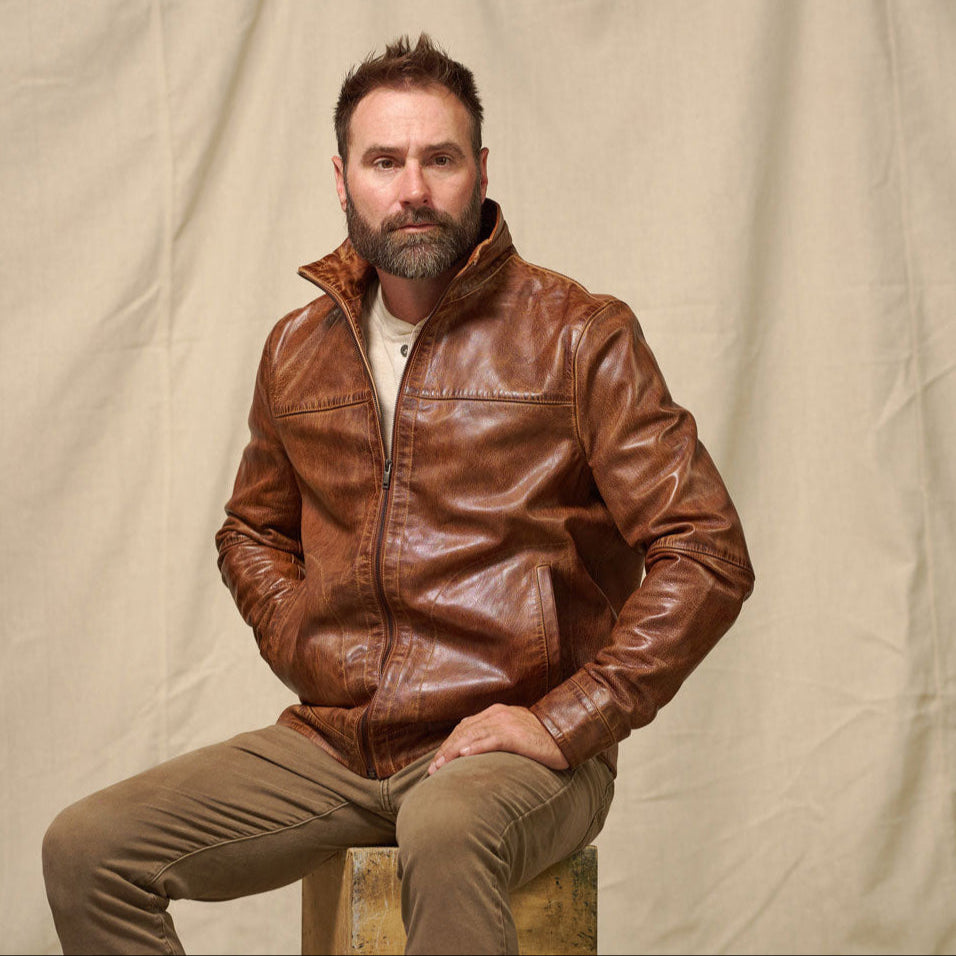
The Sedona Lightweight Leather Jacket — built for all of it.
The men who made leather jackets iconic didn’t treat them as seasonal gear. They wore them the way a good man wears a good watch — constantly, unselfconsciously, as if the jacket had always been there and always would be.
Steve McQueen wasn’t reaching for his jacket because it was cold. He was reaching for it because it was his. His style philosophy was simple: high-quality basics, clean fit, nothing competing. A leather jacket over a white tee. Jeans. Desert boots. Done. Spring, fall, cool summer evening — the equation didn’t change.

Marlon Brando with Rod Steiger in On the Waterfront, 1954 — Columbia Pictures publicity still. Public domain via Wikimedia Commons.
“There’s a line where he snarls, ‘Nobody tells me what to do.’ That’s exactly how I’ve felt all my life.”
— Marlon Brando, on his character in The Wild One, from his autobiography Songs My Mother Taught Me, 1994Brando selected Johnny Strabler’s leather jacket from his own wardrobe. It wasn’t a prop. It was the jacket he already wore. That’s what made it feel so real — because it was. When schools started banning students from wearing the Brando look, it only confirmed what everyone already sensed: the leather jacket wasn’t just clothing. It was a position.

Marlon Brando, 1953. Press portrait from Scena Muda magazine, Brazil. Public domain via Wikimedia Commons.
James Dean understood this too. Off-screen, Dean gravitated toward clean-cut leather pieces worn simply — over a tee, with straight jeans, without ceremony. The refinement he brought to the leather jacket gave it something Brando’s moto jacket didn’t always have: the sense that it belonged not just on a motorcycle but anywhere a man wanted to be.

Steve McQueen, 1960. Public domain via Wikimedia Commons.
“Just make sure you’re clean, son. Just make sure everything’s clean.”
— Steve McQueen, to his son Chad, on getting dressedThat was McQueen’s entire philosophy. Clean. Intentional. Nothing extra. His leather jacket wasn’t the statement — it was the frame everything else sat inside. He favored short, cropped jackets in leather and treated them the way a carpenter treats a good tool: used them constantly, maintained them, expected them to last.
The lesson from all of them is the same. These weren’t men who kept a leather jacket for special occasions. They wore it. Season to season. City to country. Morning to night.
Here’s the honest answer to why most men’s leather jackets don’t survive four seasons: they’re built for one.
Heavy cowhide motorcycle jackets are winter pieces with attitude. They’re dense, stiff until broken in, and designed to block serious cold and road wind. Put one on in April and you’ll overheat before lunch. They don’t breathe. They don’t layer cleanly. They’re built for the season they were built for.
Quilted and insulated leather jackets have the same problem in the other direction — all that interior lining makes them a winter piece regardless of what the leather itself could do.
The exception is full-grain sheepskin. Sheepskin is naturally lighter than cowhide. It’s composed of thinner, more pliable layers that breathe better and move with you rather than against you. It breaks in fast — often within the first few wears. And when it’s lined with something breathable rather than insulating, it becomes genuinely wearable across the range of temperatures most men actually encounter most of the year.
That’s the material we used for the Sedona Lightweight Leather Jacket. Not despite wanting it to be a real leather jacket, but because of it.
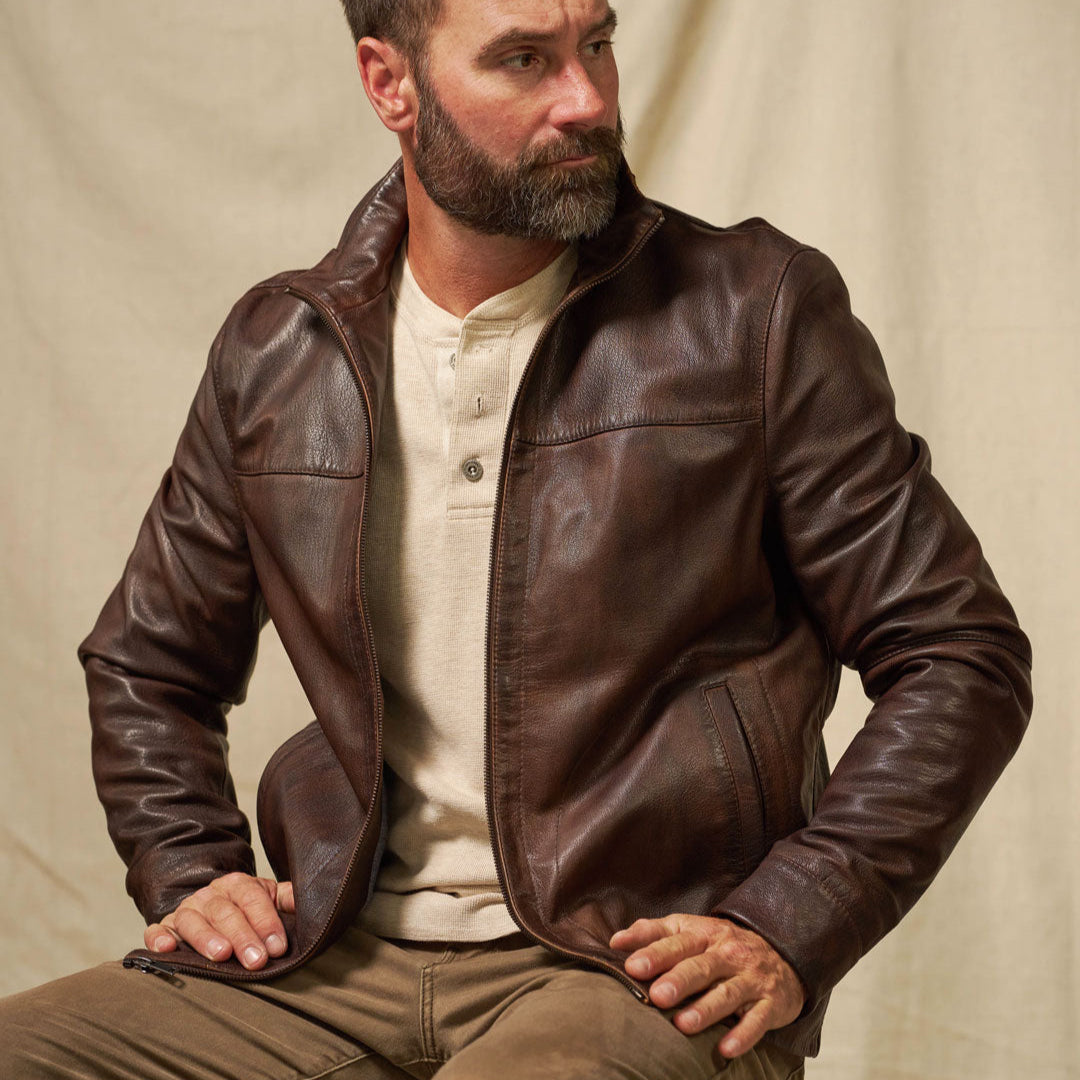
Ironwood Brown. Over a henley. No decisions required.
Here’s how it actually works — what to wear it with, when to reach for it, and how the Sedona handles each season.
Spring is the hardest season to dress for. Fifty-five degrees at seven in the morning, seventy-two by two in the afternoon, back to sixty by the time you’re heading home. Most outerwear fails this test — too heavy by midday, not enough in the morning.
A lightweight leather jacket nails it. Over a tee or a lightweight henley, the Sedona handles a cool spring morning without trapping heat as the day opens up. The chambray lining breathes rather than insulates. You wear it, you forget you’re wearing it, and when the sun’s up and it’s warm, you don’t regret the choice you made at seven a.m.
McQueen built his entire wardrobe around this kind of thinking — pieces that worked without demanding attention. The leather jacket over a white tee was his spring look and his fall look and his cool summer evening look. It didn’t need to be anything else.
In the middle of a July afternoon, no one’s reaching for leather. But summer evenings are a different story — especially at altitude, on the coast, or anywhere the air has a bite to it after sundown. The campfire drops ten degrees in an hour. The mountain town restaurant has the door open and a draft coming through. The drive home from the lake is cooler than the drive there.
This is when a lightweight leather jacket earns its summer keep. Thrown over your shoulder on the way out the door. Slung over the back of a chair at dinner. On when you need it, off when you don’t. Light enough to carry without thinking about it.
Fall is when a leather jacket stops being a layering tool and becomes an outer layer. The air has a clean edge to it. The mornings mean something again. This is the Sedona’s home season — the one it was built to own.
Over a flannel, it has serious weight without serious bulk. Over a wool quarter-zip, you’re pressing into temperatures most jackets would tap out on. Layer it under a heavier waxed canvas or wool shell on the coldest days and it becomes a genuine mid-layer with the patina of a piece that’s been somewhere.
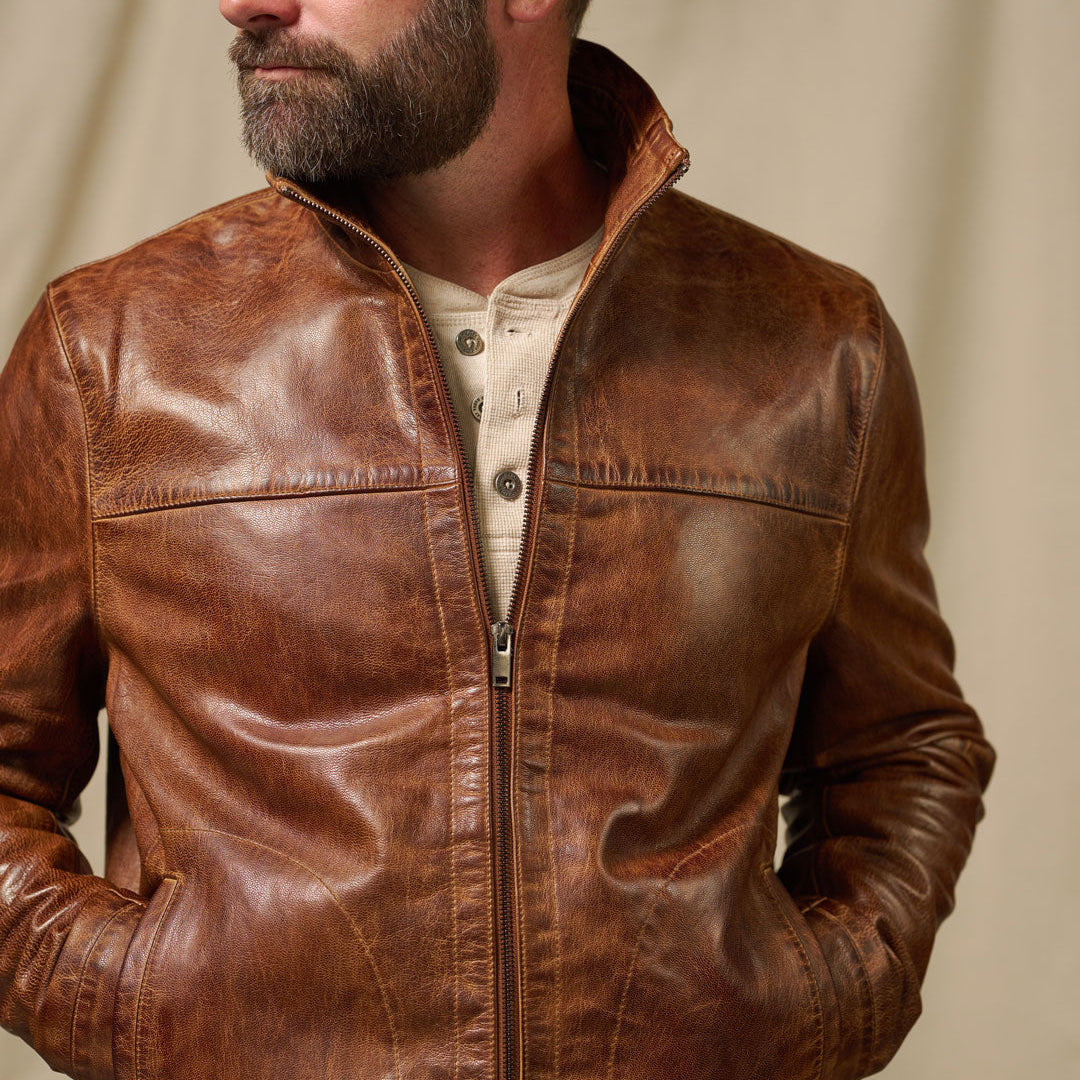
Copperwood Brown. The color of fall light on old saddle leather.
In hard winter, a shearling bomber or an insulated leather jacket is the right call. But the Sedona isn’t finished — it’s just moved inside the layering system. Under a heavy wool overcoat or a waxed canvas shell, it adds warmth without adding bulk in the places that matter. In milder winter climates — the South, the coast — it holds its own as the outer layer well into December.
The point is that four-season wear doesn’t mean every-temperature wear. It means the jacket earns its place in your rotation twelve months a year, never sitting idle for six.
Spring
The Clean Morning Layer
Summer
The Evening Carry
Fall
The Full Outer Layer
Winter
The Mid-Layer
McQueen’s style guides itself. His principles were few and they were right.
Fit first. Always. McQueen’s leather jacket fit close to the body — not tight, but not loose. It moved when he moved. Nothing bunched. Nothing pulled. A leather jacket that’s too big reads as an afterthought. One that fits reads as intention. Check our leather jacket fit guide before you size.
Wear simple things under it. McQueen’s instinct was always to reduce, not add. A white tee. A navy crewneck. A cream henley. The leather jacket is the piece — everything else supports it. When you put too much underneath, the jacket stops leading.
Let the leather age. Brando wore his own jacket in The Wild One. McQueen’s A-2 was a genuine military piece, already beaten in. The patina those jackets had didn’t come from careful storage — it came from being worn. Full-grain sheepskin deepens and softens with every wear. Keep it conditioned with our leather care products and it will outlast almost anything else in your closet.
Don’t overthink the season. The men who made leather jackets iconic weren’t checking the forecast before they put one on. A lightweight leather jacket in April is fine. In September it’s fine. On a cool July evening it’s fine. The jacket doesn’t know what month it is. It just needs a man who knows how to wear it.
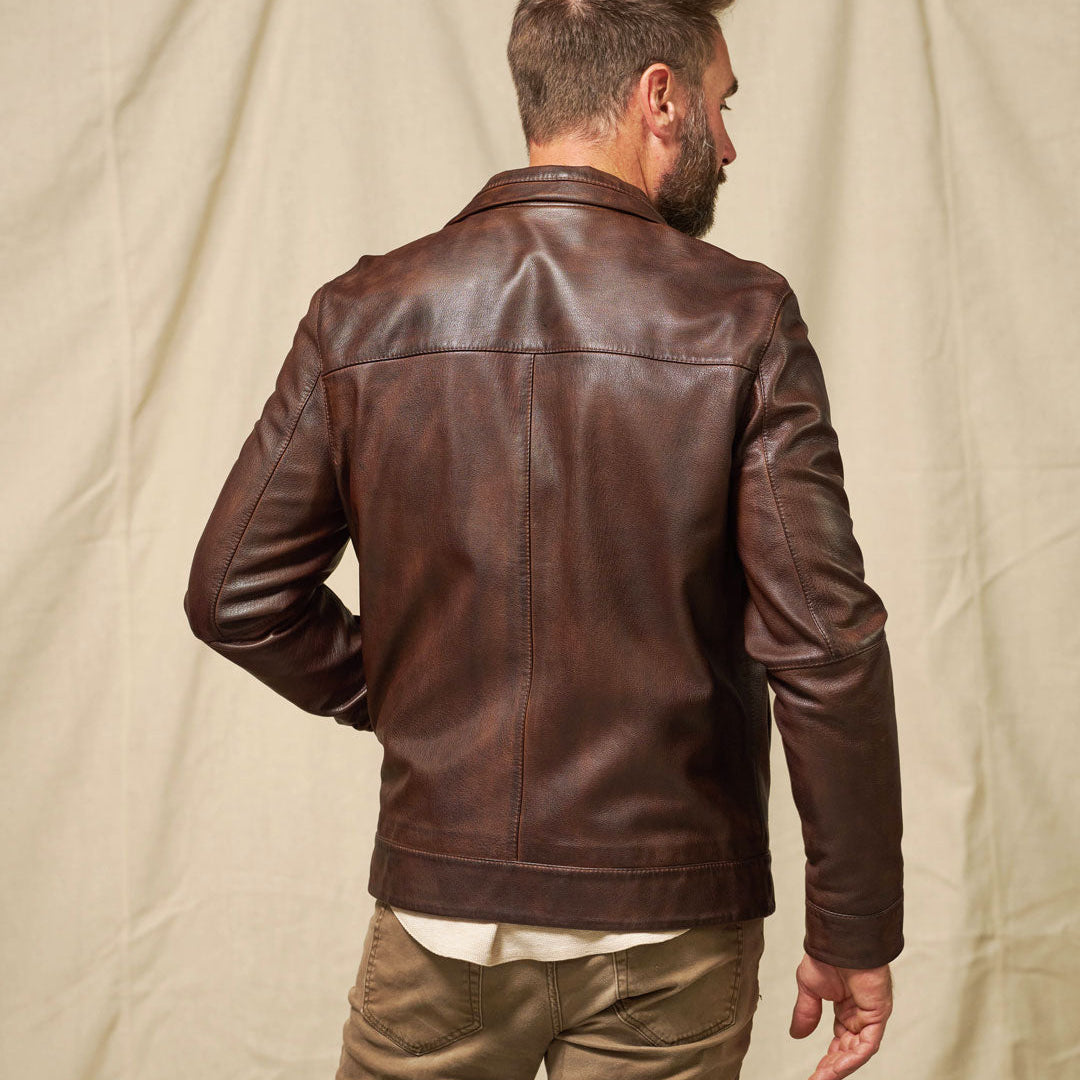
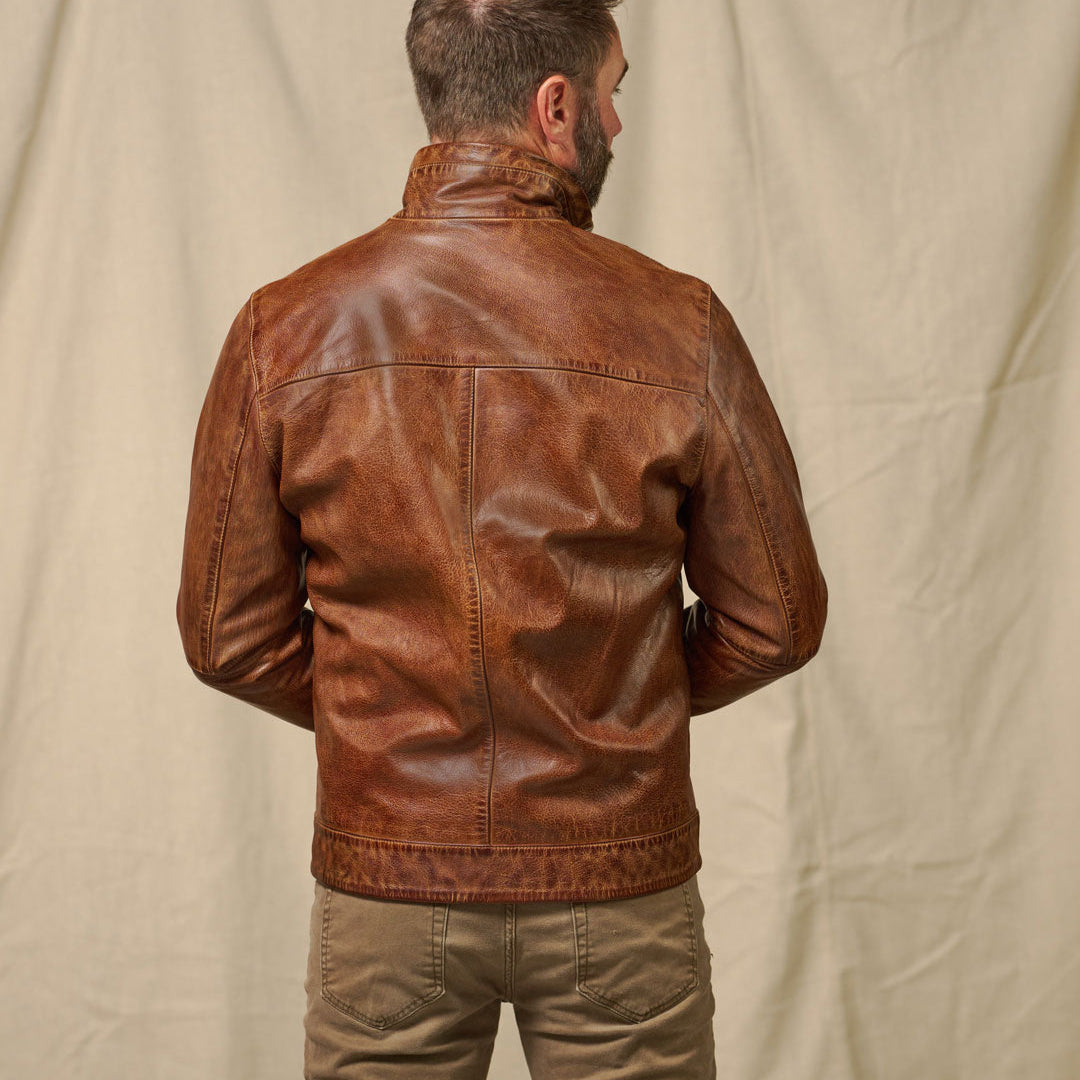
Ironwood Brown (left) and Copperwood Brown (right). The same jacket. Two different conversations.
We didn’t build the Sedona to be a winter jacket or a fall jacket or a jacket for cool evenings only. We built it to be the jacket you stop thinking about — because it’s always right, always ready, always improving with use.
Full-grain sheepskin. Vintage brown wash. Chambray lining. The details that matter in a real leather jacket, without the weight that limits when you can wear one.
Material
Full-Grain Sheepskin
Lining
Chambray Interior
Hardware
YKK Zipper + 3 Pockets
Colorways
Ironwood & Copperwood Brown
Brando wore his own jacket in a movie that changed American fashion. McQueen wore his A-2 on film sets, at racetracks, and running errands in Brentwood. They weren’t thinking about it. They were just living in it.
That’s what a good leather jacket does. It stops being something you put on and becomes something you just wear. The Sedona gets there faster than most — and gets better every season after that.
Can you wear a leather jacket year-round?
Yes — with the right jacket. A heavyweight cowhide moto jacket is a cold-weather piece. But a lightweight leather jacket made from full-grain sheepskin is designed to be worn across all four seasons. It’s light enough to layer over a tee in spring, versatile enough for fall evenings, and thin enough to use as a mid-layer in winter.
What type of leather jacket is best for year-round wear?
Full-grain sheepskin is the best material for a year-round leather jacket. It’s lighter and more pliable than cowhide, breaks in quickly, and regulates temperature better across seasons. Look for a chambray or lightweight lining rather than insulated quilting, which traps too much heat for three-season use.
Can you wear a leather jacket in spring?
Yes. A lightweight leather jacket is one of the best spring layers a man can own. Wear it over a henley or t-shirt on cool mornings. When the day warms, thin sheepskin won’t trap heat the way a heavier jacket would. It handles the 55–65°F range better than almost any other piece of outerwear.
Can you wear a leather jacket in summer?
In peak summer heat, a full leather jacket is too much. But in mountain towns, coastal evenings, or anywhere the temperature drops at night, a lightweight leather jacket earns its keep. Think campfire evenings, high-altitude mornings, or any place the summer air has an edge to it after sundown.
How do you style a leather jacket in fall?
Fall is a leather jacket’s best season. Layer it over a flannel shirt, a wool henley, or a lightweight knit. Pair with dark denim and boots. On colder days, wear it as a mid-layer under a heavier waxed canvas or wool coat. Choose a lightweight sheepskin jacket that moves cleanly under other layers.
What did Steve McQueen wear with his leather jacket?
Steve McQueen typically wore his leather jacket over a simple white t-shirt or navy crewneck sweater, paired with straight-leg jeans and desert boots or work boots. He favored clean, unfussy combinations — nothing competing with the jacket. The key was fit: everything close to the body, nothing loose or sloppy.

Written by
Xan Hood
Founder and CEO of Buffalo Jackson, a heritage leather goods and outerwear brand started in 2009. Xan leads product development personally and writes about full-grain leather, craftsmanship, and heritage apparel from 17 years of firsthand experience.
More about Xan →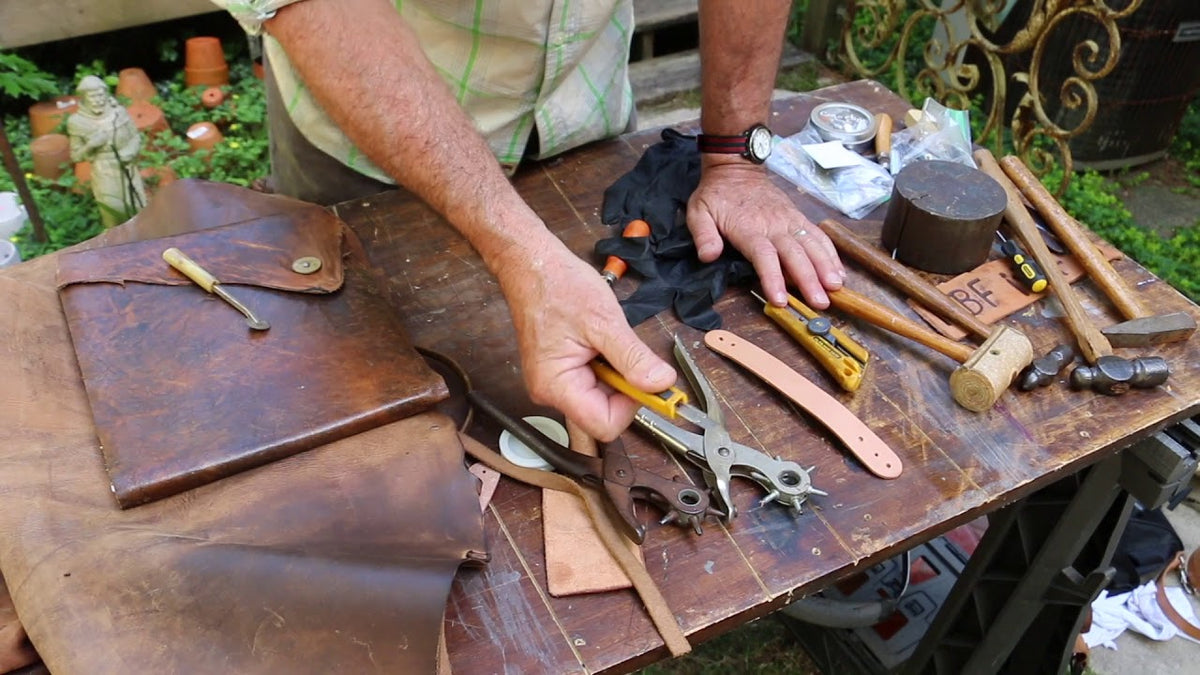
The tools and steps for simple leather bag repairs at home: punching a new strap hole, setting a rivet, slicking an edge, and knowing when to call a pro.
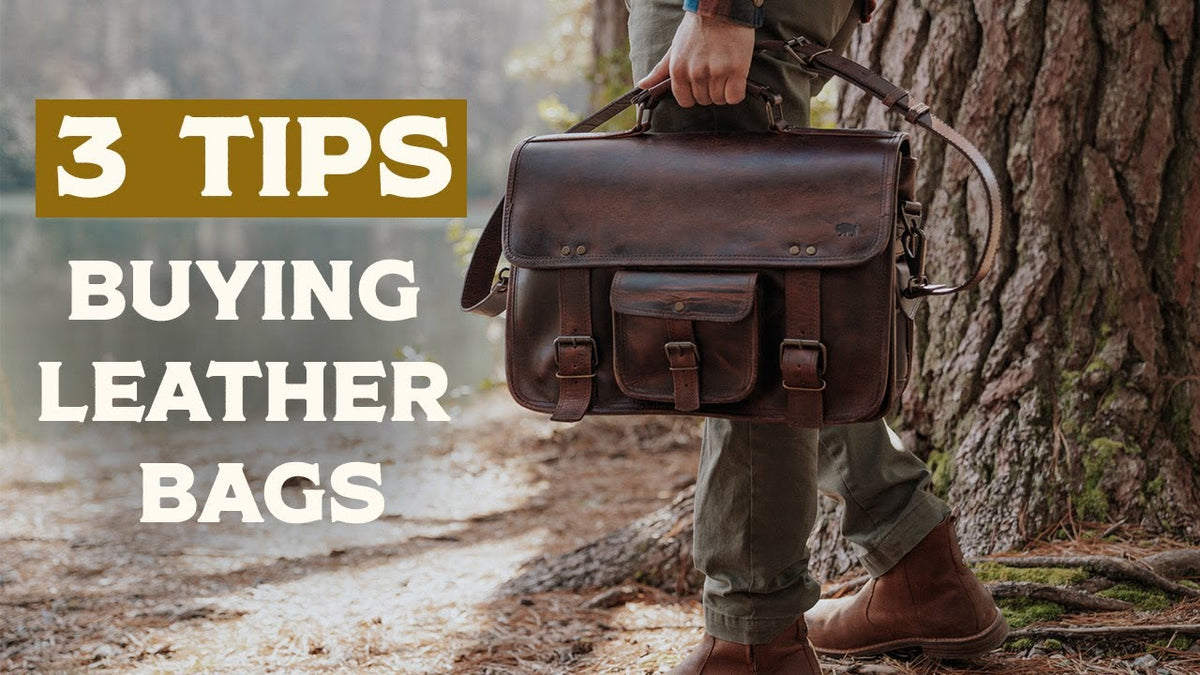
Three things to check before you buy a leather bag: the grade of leather, the hardware, and whether the style fits how you'll use it.
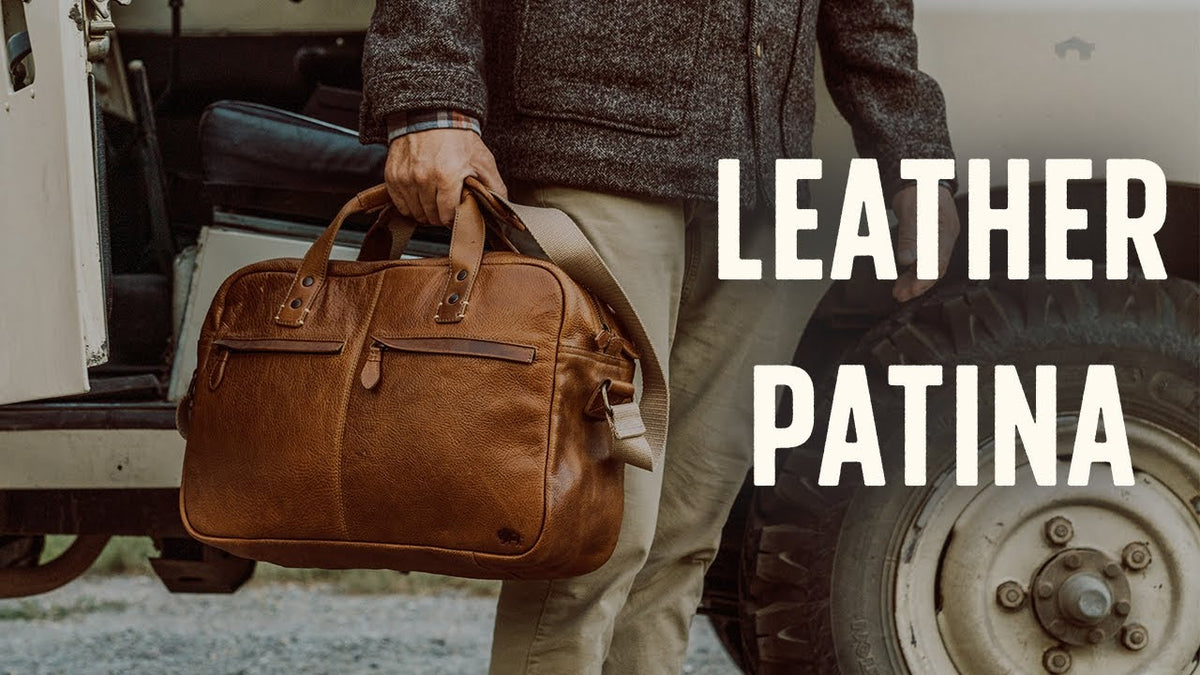
What leather patina is, what causes it, and 6 steps to develop a rich patina on full-grain leather, with our video.