
Close
CART (0)
Field Notes · Materials
A shearling jacket is warm because crimped wool traps still air and the hide blocks the wind. It stays comfortable across a wide range of temperatures because wool absorbs body moisture and releases it again. It resists odor, sheds light rain and snow, doesn't melt near a fire, and with basic care lasts for decades.
The trade-offs are real: shearling is expensive, heavier than down, and needs a little care. For anyone with a real winter who wants one jacket to wear for twenty years, it is worth it.
Shearling is the oldest cold-weather material there is. People were wearing sheepskin with the wool on five thousand years ago, and air forces were still issuing it to bomber crews in the 1940s. It has lasted that long because nothing else does quite as many things well at once.
Here is what shearling does better than anything else, and where it falls short, so you can decide whether it belongs in your closet.
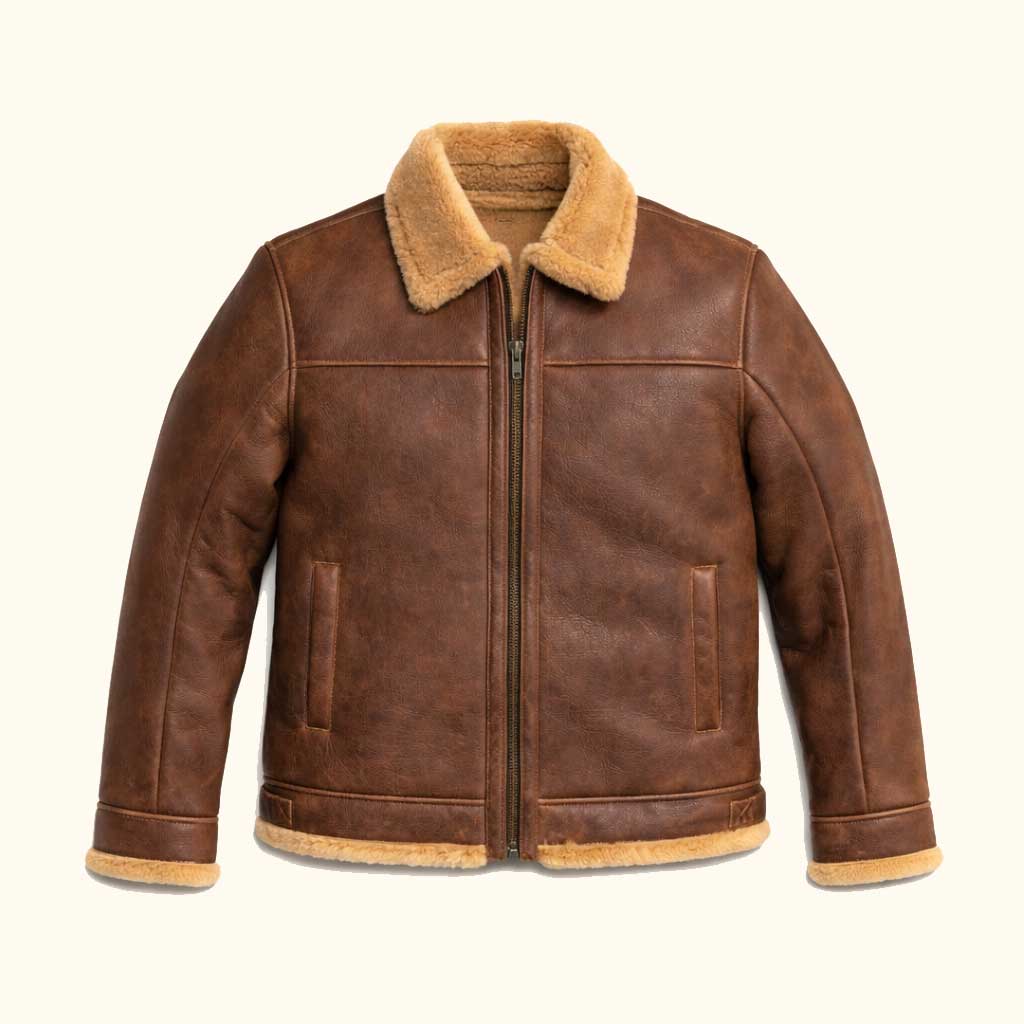
Wool fibers are crimped, which means each one is wavy rather than straight. Packed densely on a sheepskin, they hold countless small pockets of still air, and still air is what keeps you warm. Merino shearling is especially dense, which is why a good shearling jacket feels warmer than its weight suggests.
That is not marketing. It is why the U.S. Army Air Corps put its bomber crews in sheepskin B-3 jackets for missions at 25,000 feet in unheated aircraft.
Most warm jackets need two parts: an insulating layer and a shell to stop the wind. Shearling is both at once. The hide on the outside is dense enough to block wind on its own, and the wool on the inside holds the heat. A sweater, a fleece or a sherpa lining can't do that without a shell over it.
This is the benefit people notice after a week of wearing one. Wool can absorb around 30 percent of its own weight in water vapor without feeling damp. When it absorbs moisture from your body it releases a small amount of heat, and when the air around it dries it gives the moisture back.
In practice, that means a shearling jacket stays comfortable walking from a cold street into a warm store and back out again. Synthetic insulation, which absorbs almost no moisture, is more likely to leave you clammy indoors and chilled when you step outside.
Wool is coated in lanolin, a natural wax that repels water. Snow and light rain bead up and shake off, and finished leather-out shearling sheds water even better. The same properties help shearling resist dirt: the lanolin and the structure of the fiber make it harder for grime to stick.
Shearling is water resistant, not waterproof. A soaking needs to dry slowly, away from heat. Our care guide covers exactly what to do.
Wool absorbs odor molecules and releases them when aired, and it doesn't give bacteria the easy home that polyester does. A shearling jacket worn all winter usually needs nothing more than a night hanging in fresh air.
Wool is one of the most flame-resistant natural fibers. It is hard to ignite and tends to smolder and self-extinguish rather than burn. Polyester, by contrast, melts. If you spend evenings around a campfire or a wood stove, that is worth knowing.
A well made shearling jacket is one of the most durable garments you can own. The hide is tough, the wool is resilient, and good shearling softens and molds to you over the years instead of wearing out. It's common for shearling jackets to be passed down.
"I had bought this fantastic jacket approximately 3-4 years ago now and I thought I would write another updated review of it now that it's nice and broken in. The quality has genuinely held up, and if anything, it's only gotten more comfortable."
Matt M., verified buyer, Shearling Leather Bomber JacketThere is a sustainability argument in that longevity too. Shearling is a by-product of the meat industry, using hides that would otherwise be thrown away, and one jacket worn for twenty years replaces several cheaper ones that end up in a landfill.
A real shearling jacket takes several hides and weeks of tanning and finishing. Expect $700 to $1,500 for a good one. The way to think about it is cost per winter: a $900 jacket worn for twenty winters is $45 a year.
Down is still the warmest insulation for its weight. Shearling is heavier, which matters for backpacking or packing a suitcase. For everyday wear, most people come to like the weight.
No washing machine, no radiator, no ordinary dry cleaner, and it wants a wide hanger and a breathable bag in summer. That's about it, but it isn't a jacket you can throw in the wash.
A correction to our old version of this article: we used to call shearling hypoallergenic. That overstated it. Many people who find synthetics or scratchy wool irritating are comfortable in shearling, but people with a lanolin or wool sensitivity can still react. If you have one, try it on before you buy.
| Shearling | Down | Synthetic fill | Sherpa lining | |
|---|---|---|---|---|
| Warmth for weight | High | Highest | Medium to high | Medium |
| Wind resistance | High, built in | Depends on shell | Depends on shell | None without a shell |
| Comfort indoors and out | Excellent | Good, can overheat | Fair, can run clammy | Fair |
| Wet weather | Water resistant | Loses loft when wet | Keeps warmth when wet | Dries fast |
| Near fire | Flame resistant | Shell melts | Melts | Melts |
| Lifespan | Decades | 5 to 15 years | 3 to 8 years | A few seasons |
| Price, jacket | $700 to $1,500+ | $150 to $800 | $80 to $400 | $50 to $450 |
Lifespans and prices are typical ranges, not guarantees. Down and synthetic jackets win for technical and backcountry use. Shearling wins for everyday winter wear, style and longevity.
If you live somewhere with a real winter, you'll wear it most days from December through February, and you want to buy a coat once, yes. If your winters are mild, a shearling vest or a sherpa-lined leather jacket may be all you need. If you need something to stuff in a backpack, buy down.
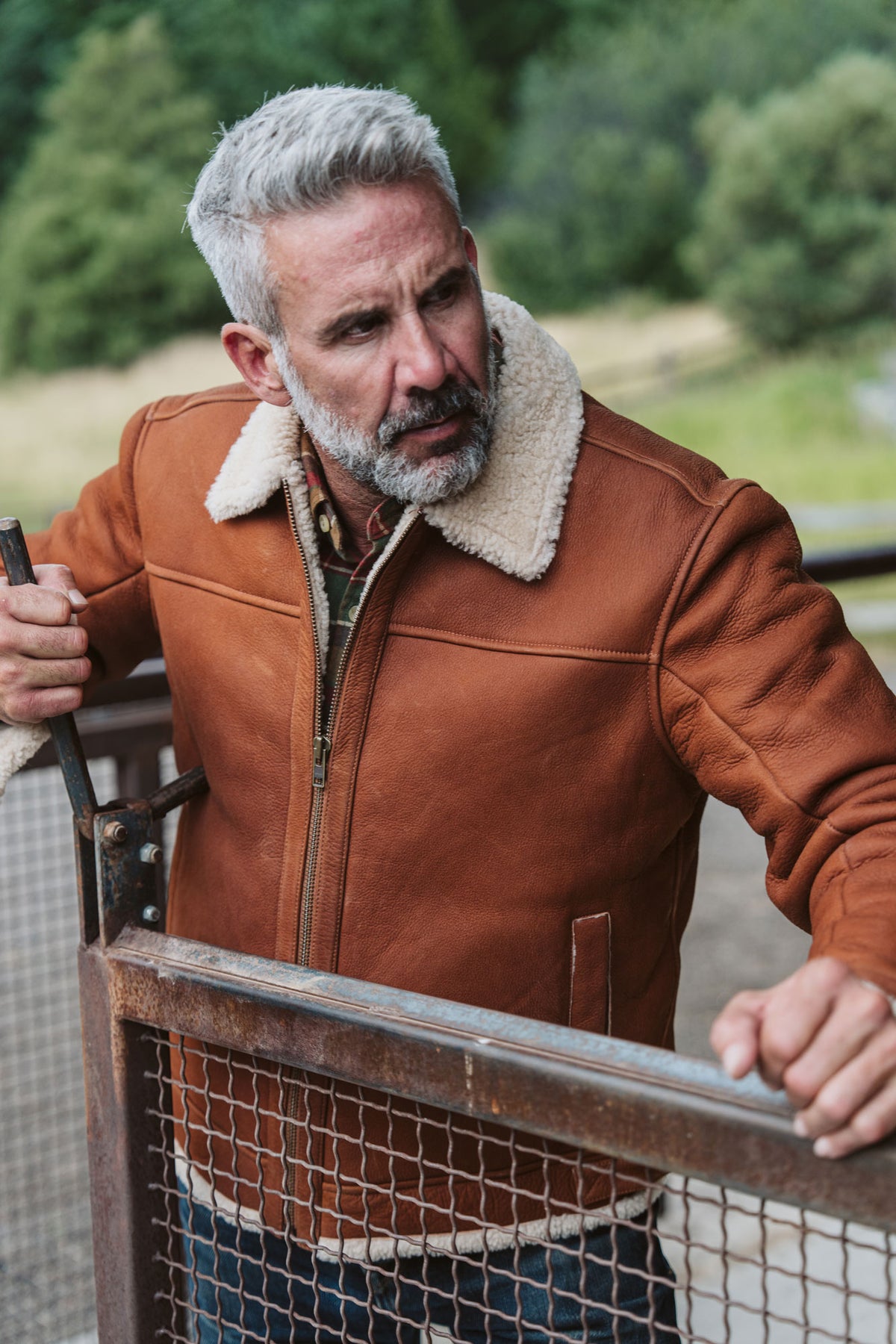
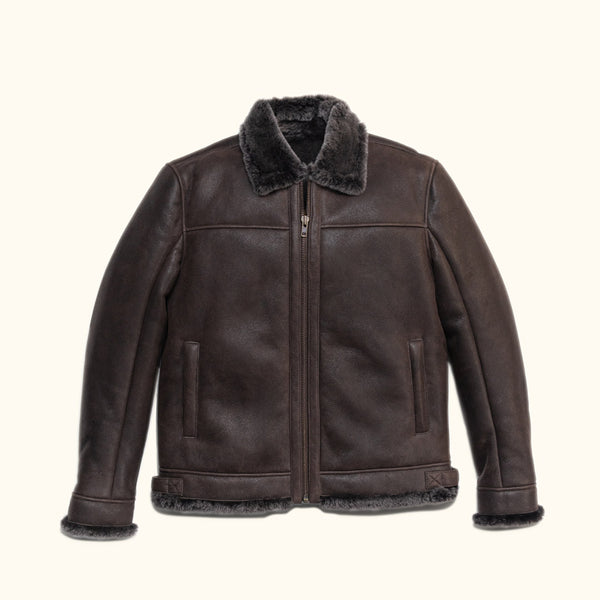
Bombers, blazers, a barn coat and vests, all merino sheepskin tanned in Turkey. Rated 4.9 across the bomber line. From $549.95
Shop shearlingNatural insulation from dense, crimped wool, built-in wind protection from the hide, temperature regulation because wool absorbs and releases body moisture, water and dirt resistance from lanolin, odor resistance, natural flame resistance, and decades of durability.
Shearling wool is crimped and densely packed, trapping still air next to your body, while the hide on the outside blocks wind. It works as insulation and windproof shell in one material.
Down is warmer for its weight, which is why it dominates technical gear. Shearling is comparably warm for everyday winter wear, blocks wind without a separate shell, handles moisture better, and lasts much longer.
Yes. Wool absorbs water vapor from your body and releases it to drier air, so shearling stays comfortable across a wider range of temperatures than synthetic insulation.
No, it is water resistant. Lanolin in the wool repels snow and light rain, and leather-out shearling sheds water well. A soaking should be dried slowly at room temperature, away from heat.
Not strictly. Many people who find synthetics or coarse wool irritating are comfortable in shearling, but people with a lanolin or wool sensitivity can still react. Try it on first if you have one.
With basic care, decades. Good shearling softens and molds to the wearer rather than wearing out, and shearling jackets are often passed down.
It costs more than most winter jackets, it is heavier than down, and it needs some care: no machine washing, no direct heat, and a specialist for deep cleaning.
For anyone with a real winter who wants to buy a coat once, yes. Worn for twenty winters, a $900 shearling costs about $45 a year. For mild climates, a shearling vest or sherpa-lined leather jacket may be enough.
Shearling is a by-product of the meat industry and a well made jacket lasts decades, both points in its favor. Tanning practices vary, so it matters to buy from makers who source from established tanneries.
Xan Hood founded Buffalo Jackson Trading Co. in 2009 and has spent the years since designing leather bags, jackets and the everyday gear a man carries, driven by a passion to see men come alive in the outdoors. He writes about the craft behind that gear and the wild places it's made for.