

Close
CART (0)
Field Notes · Sportsman
Leather does not rust a gun. Trapped moisture does, and leather is very good at holding moisture. Tanned hide is mildly acidic and it absorbs water out of the air, so a gun sealed against leather for months in a humid place will corrode faster than one left in open air. For a day in the truck or a week in the field, a lined case is fine and does its job. For storage, take the gun out. That rule is not about our cases or anybody else's. It applies to every soft case, every hard case, and every holster ever made.
This question comes up constantly on the shooting forums and it almost never gets a straight answer. People either say leather is fine because their grandfather's case never hurt anything, or they say leather eats bluing and you should never let the two touch.
Both camps are partly right, which is why the argument never ends. Here is what is actually going on.
Rust needs three things: iron, oxygen, and water. Your barrel supplies the first, the air supplies the second, and everything else in this article is about the third.
Bluing is not paint and it is not armour. It is a controlled layer of black iron oxide sitting on the steel, and it is porous. It slows corrosion down considerably but it does not stop water reaching the metal underneath. That is why blued guns are oiled and stainless ones mostly are not.
So the question is never really whether leather is corrosive. It is whether leather keeps water against your steel for longer than open air would. And the answer to that is yes, it does.
Three properties, and they compound.
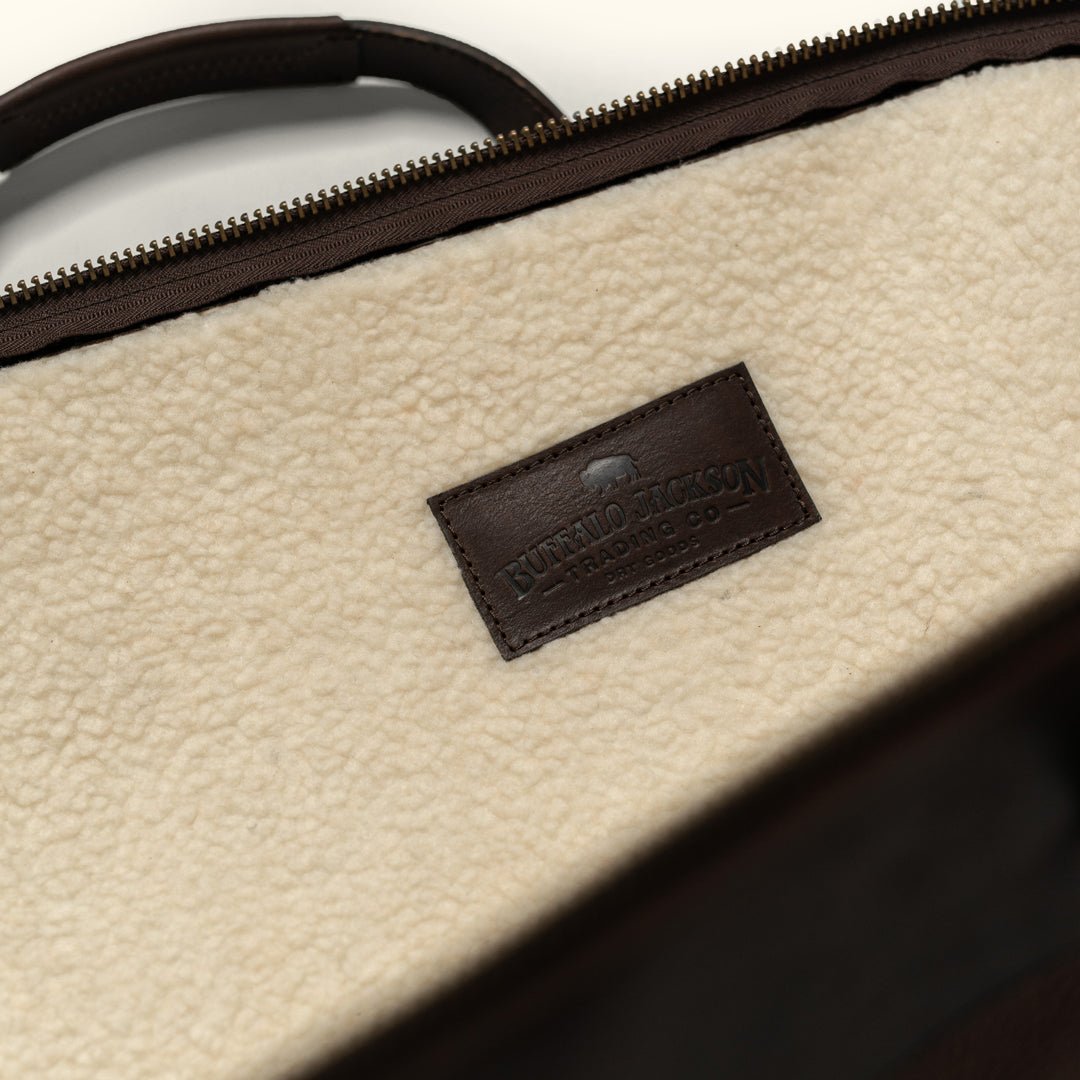
Leather is hygroscopic. It pulls moisture out of the air and holds it in the fibre structure, then gives it back when the air dries out. That is what makes it comfortable to wear and what makes it a poor thing to seal a gun against for a long time. A leather case in a damp basement is a damp object, even when it feels dry to the hand.
Tanned hide is acidic. Vegetable-tanned leather, which is what good cases and holsters are made from, typically sits somewhere around pH 3.5 to 5. Chrome-tanned leather is acidic too and can carry residual salts from the tanning process. Neither will attack a dry gun. Combine either with moisture and sustained contact and you have an environment that encourages corrosion rather than discouraging it.
Leather holds its shape against the metal. A case that fits well presses the lining into contact along the whole length of the gun. That is exactly what you want for protecting a finish from knocks, and exactly what you do not want if there is moisture in the system, because there is nowhere for it to evaporate from.
None of this is theoretical or new. It is why the holster trade has told people for decades not to store a pistol in a leather holster, and the mechanism is identical.
The single most useful sentence in this article: a case is a vehicle, not a garage. If you remember nothing else, remember that guns travel in cases and live in cabinets, and you will never have this problem.
Almost nobody rusts a gun by leaving it in a case for an afternoon. Here is the sequence that does the damage, and it is nearly always the same one.
Notice that the leather is the last link in that chain, not the first. Change any earlier step and it does not happen.
It helps, but you should understand what it is doing.
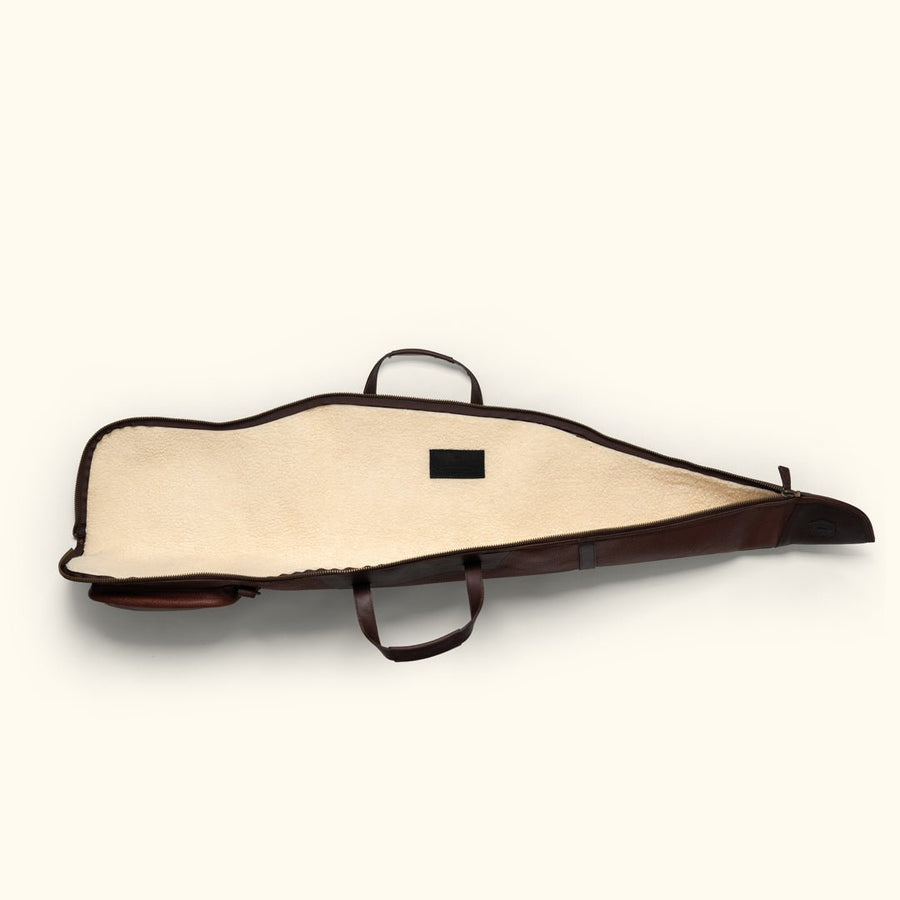
A wool shearling lining absorbs a genuinely large amount of moisture, something on the order of a quarter to a third of its own weight, without feeling wet to the touch. It pulls water off the metal and holds it in the fibre, and natural lanolin in the wool adds a small amount of water repellency. That is the traditional answer and it is a good one, right up until the wool is properly soaked, at which point it becomes a wet blanket wrapped around your barrel.
A synthetic sherpa pile, which is what most modern cases including ours use, behaves differently. Acrylic fibre does not absorb water into itself the way wool does. That cuts both ways. It will not wick a damp gun dry, but it also will not hold a reservoir of water against the steel if the case gets rained on. It cushions the finish, which is its main job, and it dries quickly.
What no lining does, of any material, is ventilate. That is the part people expect and do not get.
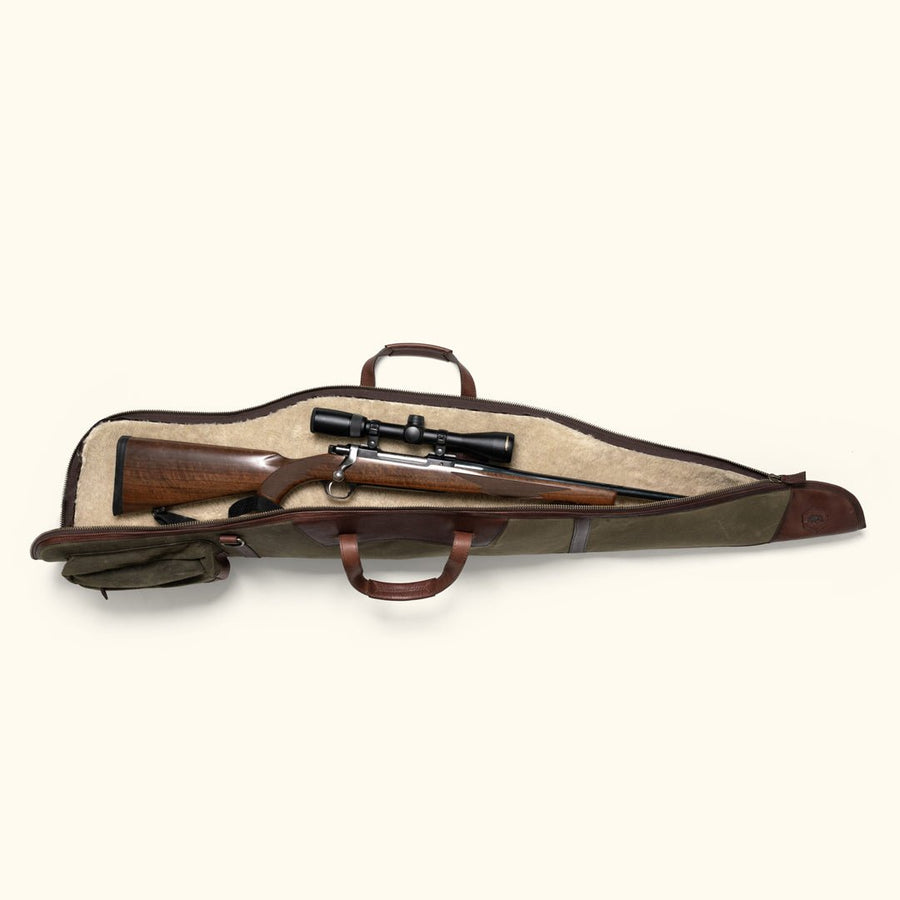
No, and in the usual configuration it is worse.
A sealed polymer case with closed-cell foam is genuinely watertight, which is excellent for keeping rain out and terrible for letting anything out. Case a gun with any moisture on it, latch the lid, and you have built a very effective little humidity chamber. The foam holds water against the metal and the gasket makes sure it stays.
The pressure-relief valve on a good hard case equalises air pressure. It does not dry the inside out.
So the rule holds across the board. Hard cases, soft cases, leather, canvas, plastic, wool, foam: none of them are storage. The material changes the details. It does not change the principle.
| Situation | Risk | What to do |
|---|---|---|
| Dry gun, dry case, a few days | Negligible | Nothing. This is what a case is for. |
| Cold gun into a warm vehicle | Moderate | Let the gun come up to temperature out of the case, then wipe it down. |
| Gun cased wet | High | Unpack at the first opportunity. Dry both, oil the metal. |
| Cased over winter in a garage | High | Do not. Cabinet, with airflow. |
| Cased in a humid climate | High | Cabinet, plus a dehumidifier rod or desiccant. |
| Sealed hard case, long term | High | Same answer. Sealed is not the same as dry. |
It does, and not in the direction most people assume. This is the one place where an expensive case is genuinely doing something a cheap one cannot.
Closed-cell foam is the worst thing you can put against a gun. It does not absorb water and it does not let air through, so any moisture on the metal is held in place against it with nowhere to go. It is the standard lining of both cheap synthetic cases and expensive hard cases, and it is the single most common reason a gun comes out of a case with bloom on the barrel.
Polyurethane-backed nylon is a vapour barrier. The coating that makes a synthetic shell water resistant works in both directions. Water that gets inside, whether from rain, a wet gun or condensation, cannot pass back out through the shell. The case becomes a sealed bag with a wet gun in it.
Leather breathes. This is the part that surprises people, given everything above about leather holding moisture. Both things are true. Full grain leather absorbs water, and it also exchanges water vapour with the air around it, which means a leather case in a dry room gives up its moisture instead of keeping it. A PU-backed synthetic shell cannot do that at all. Waxed cotton sits in between: the wax slows the exchange without stopping it.
So for the job a case actually does, which is getting a gun from one place to another in weather, a breathable shell with an absorbent or fast-drying lining is a meaningfully better environment than a sealed shell over foam.
And it still is not storage. Breathable is better than sealed, but a closed case of any material restricts airflow, and a gun left in one for a season in a humid place will corrode. The material changes how much margin you have. It does not change the rule.
Six habits. None of them take more than a minute.
A fair question to ask after all that, and the honest answer is yes, for the job it actually does.
A lined case stops your rifle sliding around a truck bed, keeps rain and dust and pine needles off it, protects the stock from the dings that come from leaning it against things, and lets you carry it hands-free up a hill. Those are real problems and it solves all of them.
What it is not, and what nothing in a similar shape is, is a place to keep a gun. Any maker who implies otherwise is either not thinking or not telling you.
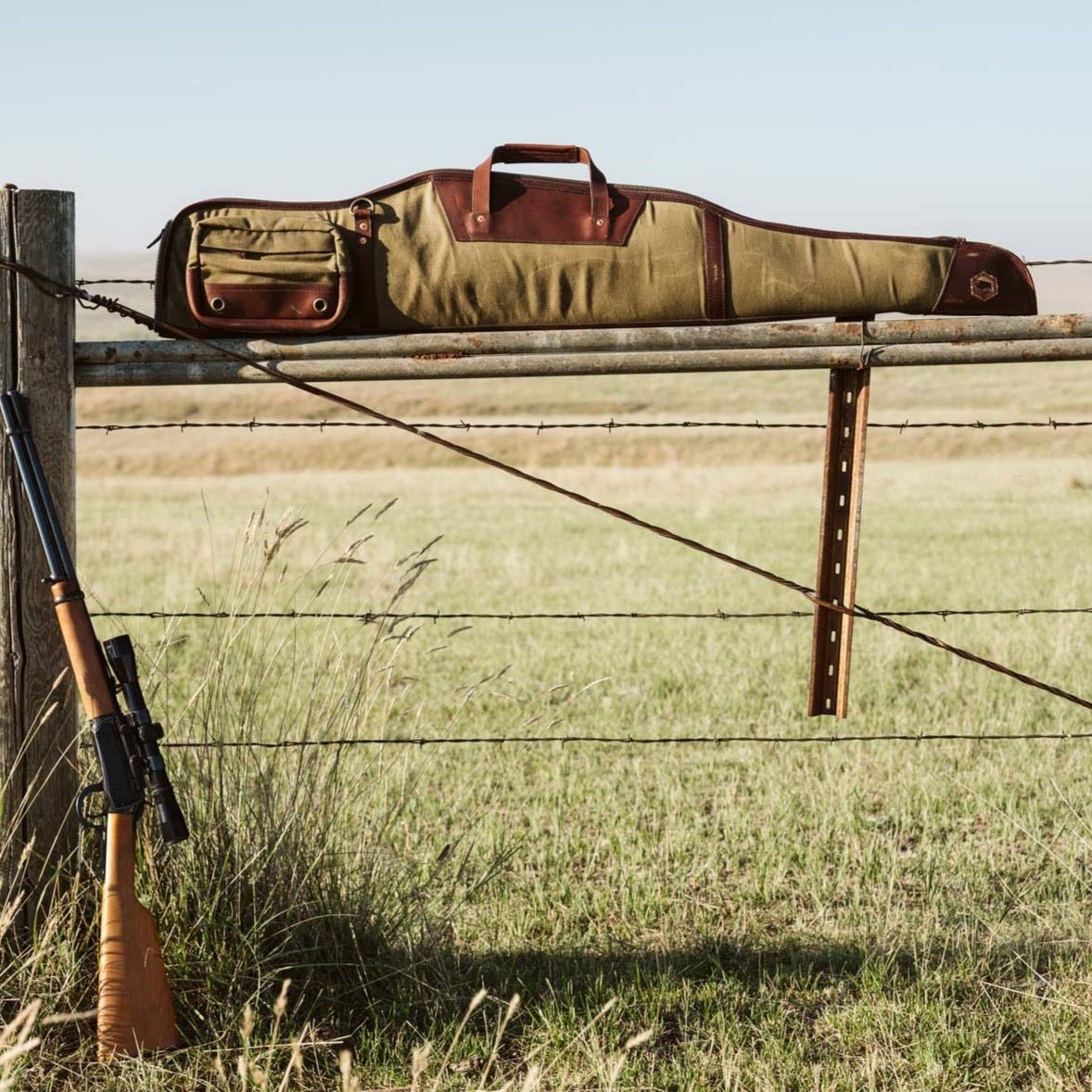
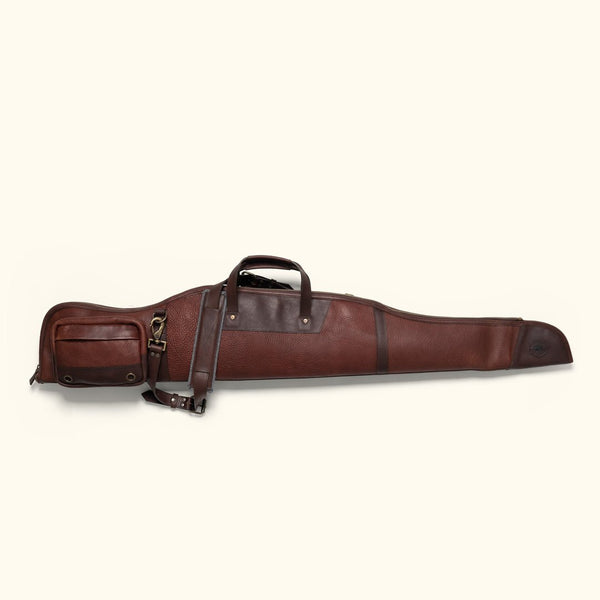
Full grain leather or 18 oz waxed canvas, sherpa lined, antique brass YKK zippers. Built for the journey, not the closet. From $199.95
See the collectionNot directly. Leather does not attack steel. What it does is absorb and hold moisture from the air, and tanned hide is mildly acidic, so a gun held in sustained contact with damp leather will corrode faster than one in open air. Remove the moisture and the leather is harmless.
Not for long periods. A closed case restricts airflow and the lining holds any moisture against the metal. Use the case for transport and store the gun in a cabinet or safe where air can circulate around it.
There is no single number, because it depends entirely on humidity and whether anything was damp going in. A dry gun in a dry case in a climate-controlled room is fine for weeks. The same gun in a garage in a humid summer can show surface rust in days. As a habit, unpack at the end of each trip.
No. A sealed hard case with closed-cell foam is watertight in both directions, so any moisture inside stays inside and the foam holds it against the metal. Neither type is intended for storage.
It helps at the margins. Wool shearling absorbs a substantial amount of moisture off the metal and holds it in the fibre. Synthetic sherpa does not absorb much, which means it will not wick a gun dry but also will not hold water against it. Neither lining ventilates, which is the thing that actually prevents corrosion.
Both are acidic and both are hygroscopic, so in practice the difference matters far less than whether the leather is wet. Chrome-tanned leather may carry residual salts from tanning, which is a reason some makers prefer vegetable tannage for anything in contact with steel, but moisture remains the governing factor.
Better, for transport. Full grain leather exchanges moisture with the surrounding air, so a leather case in a dry room gives up moisture rather than holding it. Polyurethane-backed synthetic shells are vapour barriers, and the closed-cell foam inside them holds water directly against the metal with no way out. Neither is a storage solution, but leather gives you more margin.
Take it out straight away. Dry the gun thoroughly, including under the fore-end and around the action where water collects, and wipe the metal with an oiled cloth. Leave the case open in a warm room with air moving, away from direct heat, until it is dry all the way through.
Store the gun out of any case, in a cabinet with airflow, with a dehumidifier rod or renewable desiccant. Keep a light film of oil on the metal, handle it occasionally so you would notice a problem early, and use vapour-inhibiting paper or an emitter for anything you are putting away for a season.
Xan Hood founded Buffalo Jackson Trading Co. in 2009 and has spent the years since working with leather makers in Mexico and India on bags, outerwear and sporting goods. He writes about how the things we carry are actually made. This article is general guidance on care and storage, not gunsmithing advice; if a firearm shows corrosion beyond light surface rust, have it looked at by a gunsmith.