

Close
CART (0)
Field Notes · Sportsman
Measure your shotgun from muzzle to the end of the butt pad and add two inches. A 52 inch case will take a shotgun up to 50 inches, which covers nearly every 28 and 30 inch barrel gun assembled. If you shoot clays or walk fields, a lined soft case is the right tool. If you are flying, the law requires a locking hard case. And if the gun is a good one, buy the case once. A synthetic case is a consumable you will replace a dozen times; a full grain leather slip is a thing you will still be handing over in forty years.
A shotgun spends most of its life out of your hands. In a truck, across a gator, leaned in a corner at the club, riding in a boat blind before light. The case is what stands between a gun you are proud of and a gun that looks like it has been in a fight.
Most guidance on this subject is written to fill a page. Here is what actually decides it.
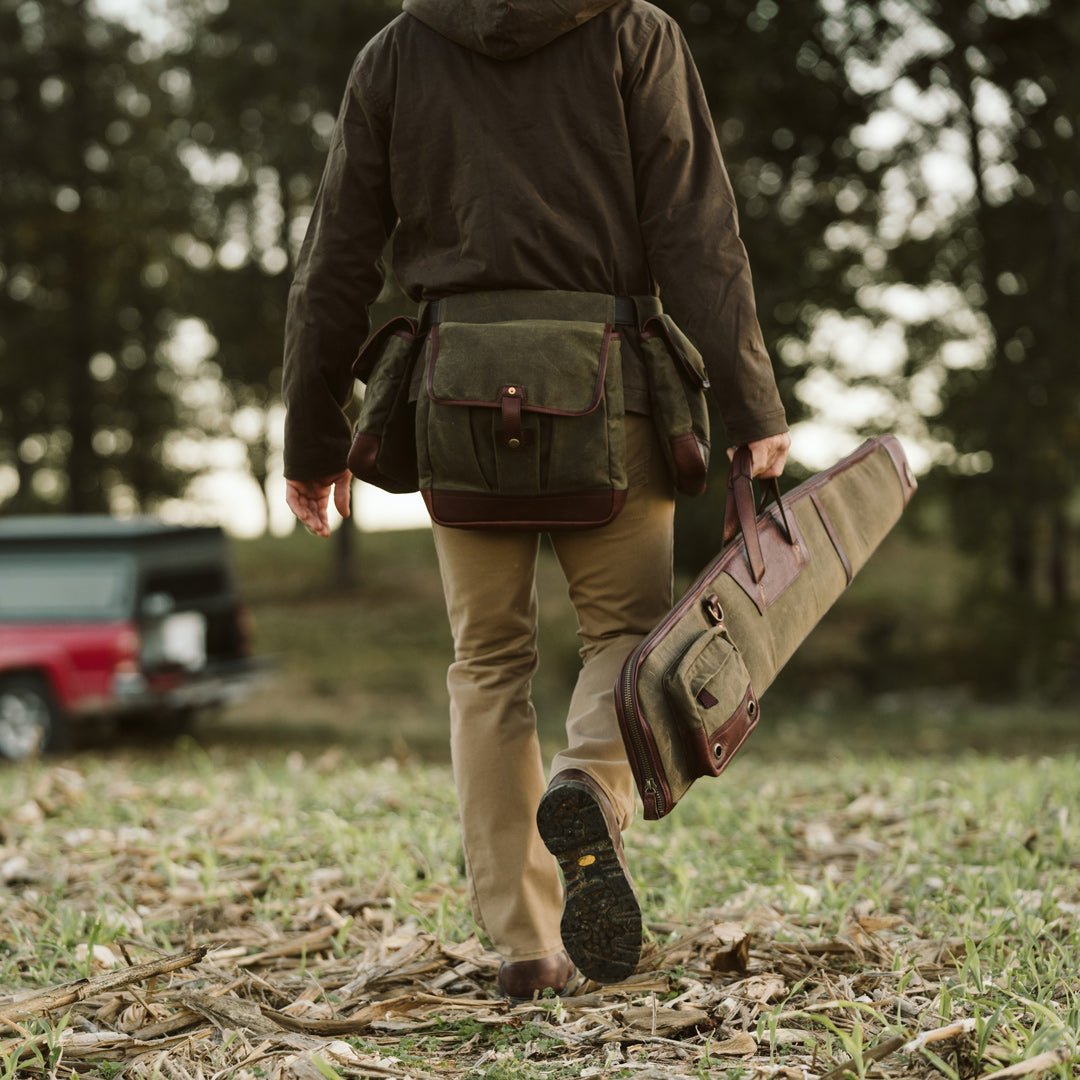
You will see all three, and the difference is worth knowing before you shop.
A slip or sleeve is the traditional term, used mostly by clay, upland and driven shooters, for a soft case that the gun slides into, usually with an open or flapped mouth. A gun case, in the older English sense, meant the fitted, hard, baize-lined box a gun travelled in broken down.
In American usage the words have collapsed together, and a soft full-length zip case like ours gets called all three. If you are searching for a slip and finding nothing, search for a shotgun case, and the other way around.
This decides more than the material does.
| Discipline | What matters | Case to look for |
|---|---|---|
| Clays and trap | In and out of the case all day, quiet, easy on the stock | Soft, lined, full-length zip |
| Upland walking | Weight, a sling, weather | Soft, waxed canvas, detachable strap |
| Waterfowl | Water, mud, long barrels | Soft for the walk, hard for the truck |
| Driven or estate days | Loading and unloading repeatedly, appearance | Leather slip |
| Air travel | Legal compliance | Locking hard case, no exceptions |
| Long-term storage | Airflow | None. Use a cabinet. |
A case is not a gun safe. Sealing a shotgun inside anything for a season traps humidity against the barrels and the action with nowhere for it to go. Cases move guns. Cabinets keep them. Treat the two jobs separately and you will not spend a spring cleaning rust off a gun you love.
Fit is the thing people get wrong, and with shotguns it is barrel length that catches them.
Measure from the muzzle to the rearmost point of the butt pad, with the gun assembled as you will carry it. Add two inches. That is your minimum case length. The two inches keep the muzzles off the end of the case and give the zipper room to close without straining.
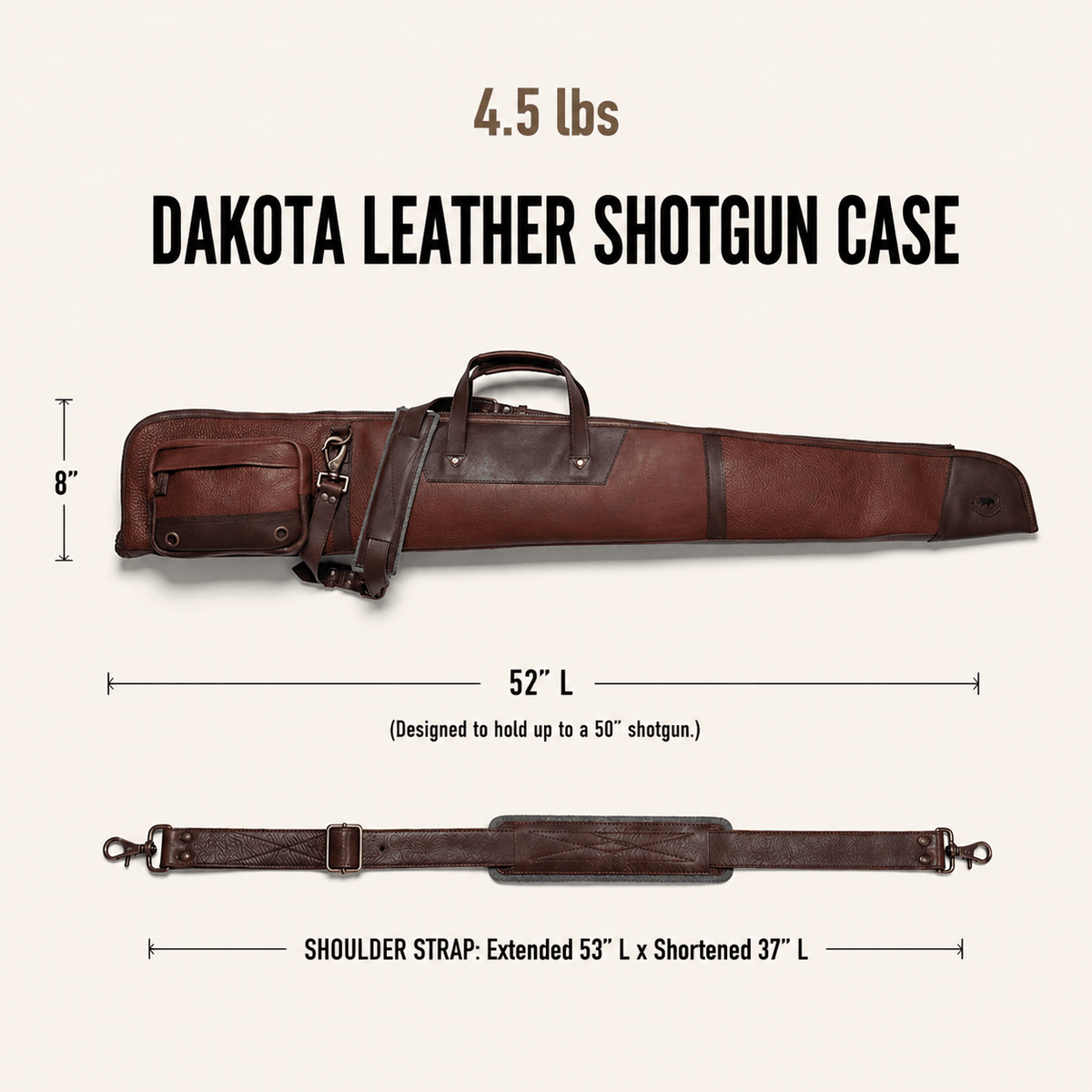
As a rough guide for an assembled gun with a standard length of pull:
Those are guides, not promises. Length of pull varies by an inch or more between guns, and an adjustable comb or a recoil pad can add to it. Measure the gun you own.
A full-length soft case carries a break-action gun assembled, which is how most people want to carry one between the truck and the stand. The receiver of an over-and-under is the deepest part of the gun, and that is what the case height has to clear. Our 8 inch height takes standard sporting and field receivers without forcing.
Semi-autos and pumps are shallower through the receiver but often longer overall for the same barrel, because of the receiver length ahead of the stock. If you shoot a 30 inch semi-auto, measure it rather than assuming it matches an over-and-under with the same barrels.
If you prefer to carry a gun broken down, you want a takedown case, which is a different object entirely and shorter by half.
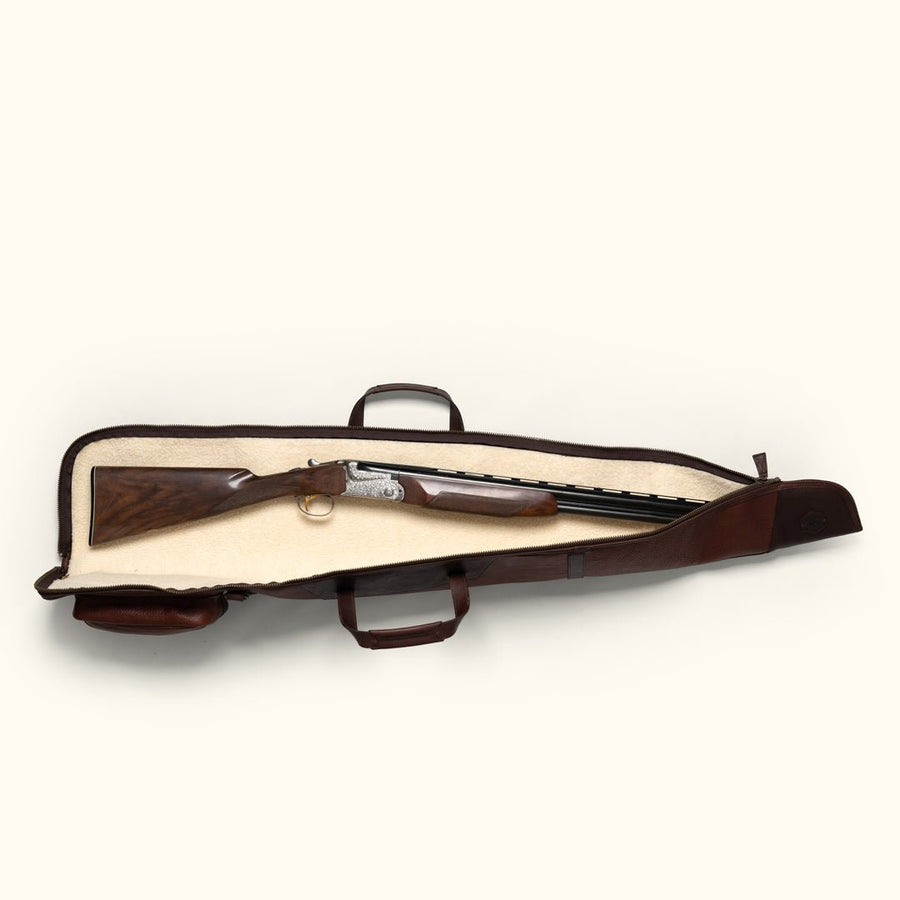
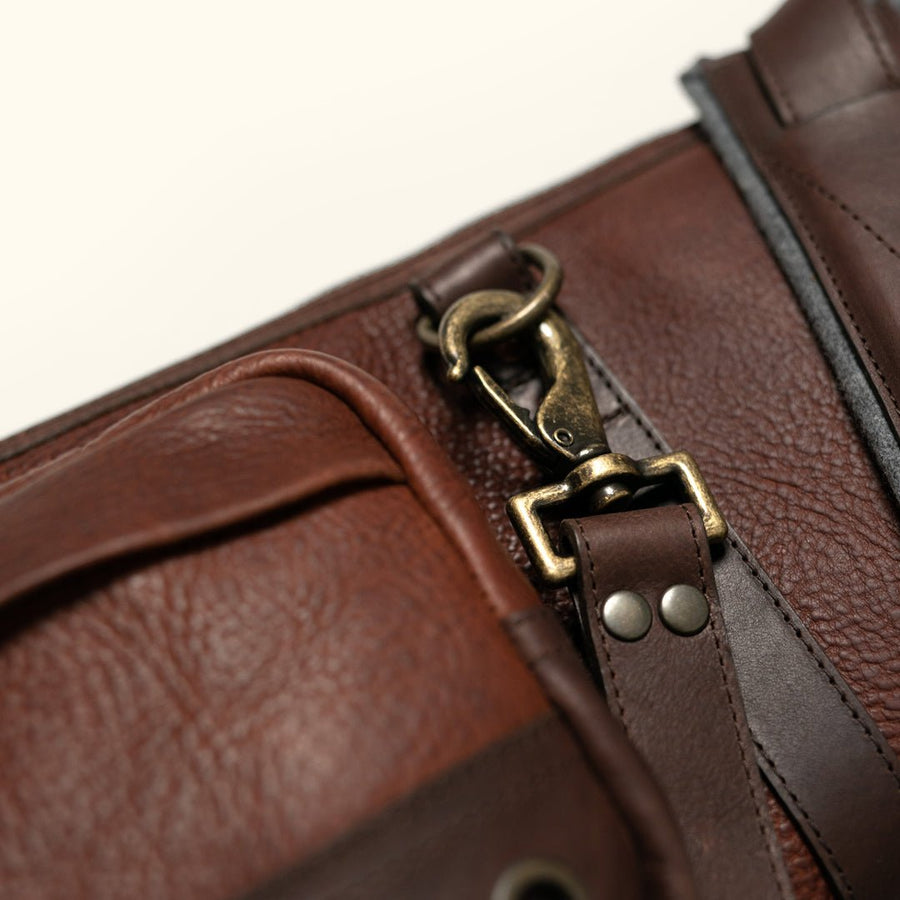
Six things, in the order they will fail if they are done badly.
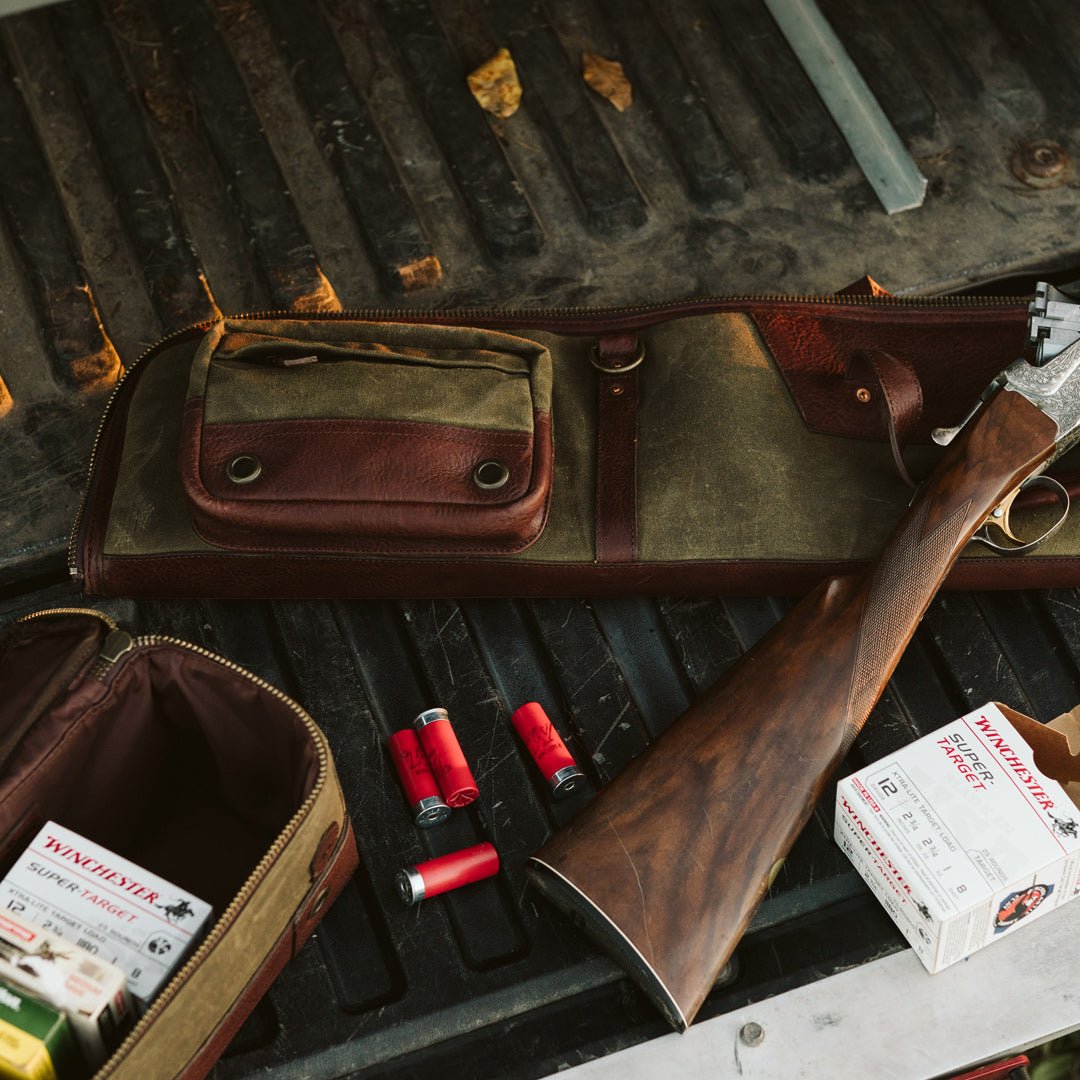
Most shotgun cases sold in this country are the same object with different labels on it. Six hundred denier polyester with a polyurethane backing, closed-cell foam inside, an unbranded coil zipper, and a webbing strap stitched to the shell. Forty-five dollars, and it will protect a gun.
For about three seasons. Then it fails, and it fails in one of four predictable ways: the zipper loses teeth, the polyurethane backing breaks down and goes tacky against the stock, the foam turns brittle and powders into the action, or the sewn strap tab pulls through the shell with the gun in it.
That is not a criticism. It is a forty-five dollar case doing precisely what a forty-five dollar case does, and being honest about it. The question is what you want to own.
| Synthetic soft case | Waxed canvas & leather | Full grain leather | |
|---|---|---|---|
| Typical price | $30 to $60 | $400 to $500 | $600 to $900 |
| Shell | 600D polyester, PU backed | 18 oz waxed cotton, leather trim | Full grain hide, single layer |
| Lining | Thin nylon over foam | Sherpa pile | Sherpa pile |
| Hardware | Unbranded coil zip, sewn webbing | Branded zip, riveted leather anchors | Branded zip, riveted leather anchors |
| Realistic service life | 2 to 4 seasons | 15 to 25 years, re-waxed | A lifetime, conditioned |
| How it fails | Zipper, foam, tacky backing, strap | Wax wears thin. Renewable. | Rarely. Zipper is replaceable. |
| Worth repairing | No | Yes | Yes, indefinitely |
| At twenty years | Long gone, five times over | Faded, waxed, still working | Darker than the day you bought it |
Forty more years of shooting, a synthetic case at forty-five dollars replaced every third season, is fourteen cases and roughly six hundred and thirty dollars. A full grain leather case at six hundred and fifty, conditioned once a year, is one case.
The money comes out level. What differs is what you are holding at the end. One of those is a case you bought last spring. The other has forty years of colour in it and a grandson who has already worked out that it is going to be his.
There is a reason the English gun trade has always cased guns in leather, and it is not decoration. A gun built by hand over hundreds of hours is not well served by something stamped out by the thousand. The case is the part of the arrangement you actually get to choose, and it is the cheapest part of it.
If you shoot a plain pump gun that lives behind the seat of a truck, none of this matters much and a synthetic case is a sensible purchase. If you shoot a good over-and-under or a side-by-side that somebody put their name on, a forty-five dollar sleeve is a mismatch, and everybody at the club can see it.
Full grain leather is the traditional answer and the handsome one. Heavier, holds its shape, and scuffs turn into patina rather than damage. It is the one that will still be worth handing over in forty years.
Waxed canvas with leather trim is lighter and sheds rain better from new. The wax wears thin at the rub points and you renew it rather than replace the case. The honest working choice for a gun that lives in a truck.
Neither is waterproof. Water resistant means a walk in the rain, not a morning in flooded timber. Anyone who tells you their leather is waterproof is selling you something.
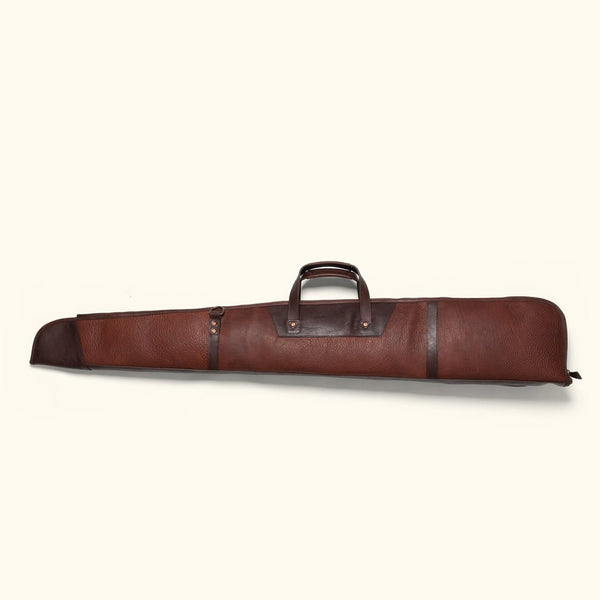
Full grain leather, sherpa lined, antique brass YKK zipper and copper rivets. Detachable all-leather sling. $649.95
See the leather case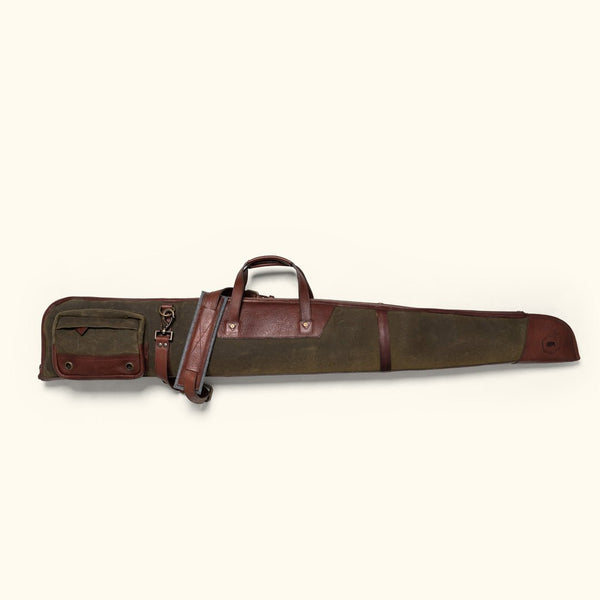
18 oz waxed cotton canvas with full grain leather trim, sherpa lined, same 52 inch shell. Lighter, and it sheds rain. $479.95
See the waxed canvas caseA shotgun case does very little of its work in the field. You are carrying the gun there, not the case.
Where the case lives is everywhere else. The rack at the club. The boot of the car with four other guns beside it. Leaned against a wall at a shoot lunch. Across the back seat on the drive home, and on the peg beside men who know exactly what everything costs and are far too polite to say so.
Shooting has always been a sport where kit is read, quietly and instantly. That is not snobbery, or not only snobbery. It is the same instinct that has a man wipe a gun down before he lends it. What a gun arrives in says something about how it is regarded.
Leather is the only one of these materials that gets better under that kind of attention. Synthetic wears out and looks it. Waxed canvas fades handsomely and is renewed. Full grain leather darkens, softens, takes the mark of the buckle and the rub of the car seat, and ends up looking as though it could not have belonged to anybody else.
Twenty years in, it has stopped being equipment. It is part of the gun.
Wipe it down dry when it comes in dirty. If it is soaked, let it dry slowly and away from heat. A radiator or a truck heater will cook leather stiff and it does not come back.
Condition leather once or twice a year, worked in with your hands rather than a cloth, and let it sit overnight before you use it again.
Waxed canvas does not get washed. Brush it with a stiff brush and cold water, and re-wax the panels when they go pale at the rub points and stop beading.
And take the gun out between outings. The case is for the journey.
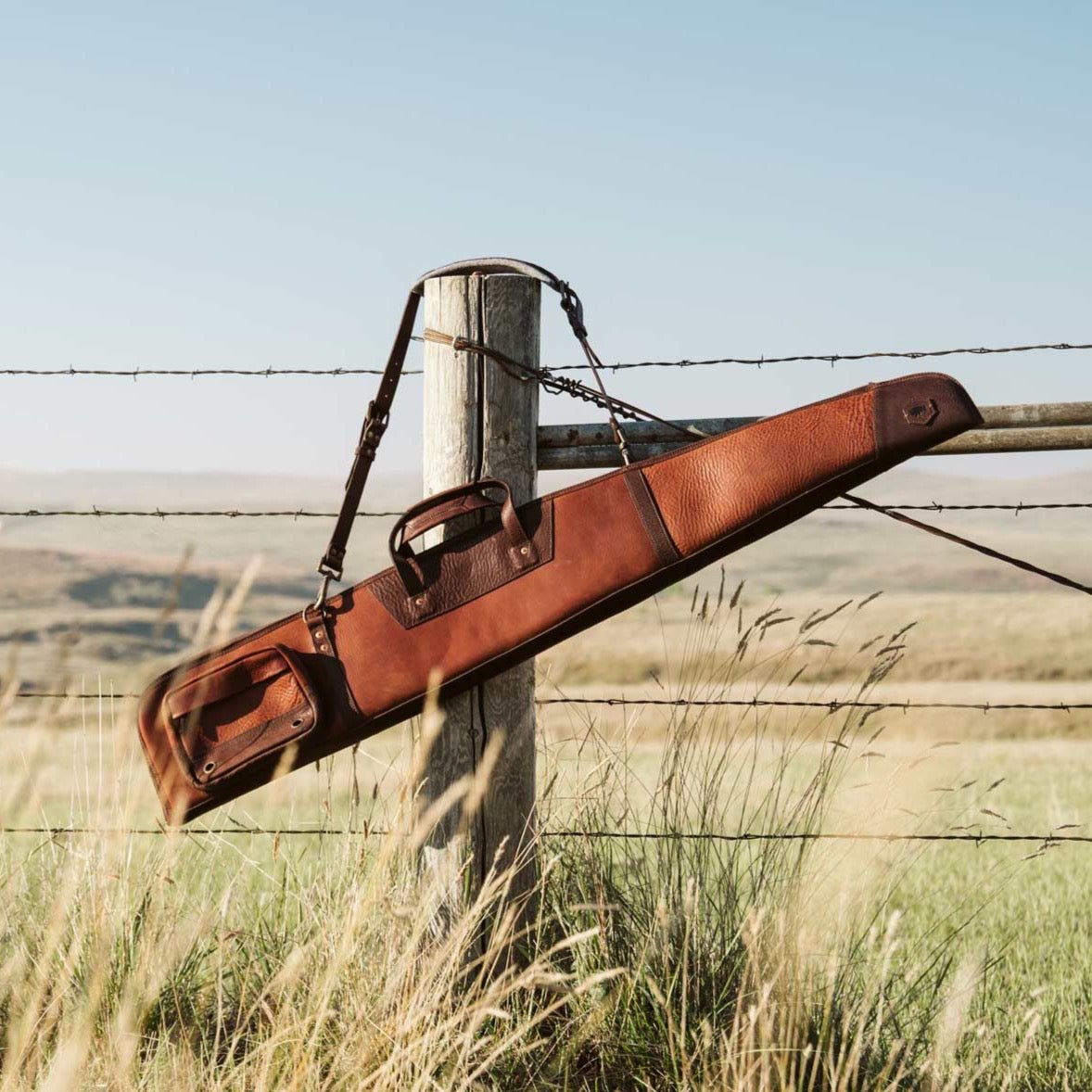
Measure from the muzzle to the rearmost point of the butt pad with the gun assembled, then add two inches. A 52 inch case takes a shotgun up to 50 inches overall, which covers most guns with 26, 28 and 30 inch barrels. A 32 inch barrel is worth measuring before you order.
A slip or sleeve is a soft case the gun slides into, the term used most often by clay, upland and driven shooters. A gun case, in the traditional English sense, is the fitted hard box a gun travels in broken down. In American usage the words are now used interchangeably for soft full-length cases.
Yes, assembled, provided the case clears the receiver. The receiver is the deepest part of the gun, and an over-and-under is deeper through it than a semi-auto. An 8 inch case height takes standard sporting and field receivers without forcing.
No. Firearms must travel in checked baggage inside a locked, hard-sided container. A soft case does not meet that requirement however well it is made. Fly with a hard case and use the soft case once you are there.
For long periods, yes. A closed case restricts airflow, and trapped humidity against barrels and action is how rust begins. Use the case for transport and store the gun in a cabinet where air can circulate.
No, water resistant. The wax finish sheds rain and wet grass and will keep a gun dry through a shower. It is not sealed, and it wears thin at the rub points, at which stage you re-wax it. For sustained immersion or downpour you want a hard case.
Over a weekend the protection is comparable. Over a decade it is not close. Synthetic cases fail at the zipper, the foam and the sewn strap tabs, and are not worth repairing. A full grain leather slip has replaceable hardware, riveted strap anchors and a shell that does not degrade, so it can be maintained indefinitely. You are buying a case you only buy once, not better padding.
Material and labour. A 52 inch case needs a large, unblemished area of full grain hide, which is the costliest part of any skin, plus a sherpa lining, branded hardware and riveted stress points, cut and stitched by hand rather than assembled on a synthetic production line. Measured per year of service the cost is comparable to replacing a cheap case every few seasons, with an object left over at the end.
The exterior pocket on a full-length case will take a box of shells, a choke wrench and your licence. Check your state and local rules on carrying firearms and ammunition together in a vehicle, which vary considerably, and do not leave ammunition in the case in storage.
It depends what is going in it. A cheap case will protect a gun for a season or two before the zipper or a strap anchor lets go. A well-made leather or waxed canvas case, kept dry and conditioned occasionally, will outlast its owner. If the gun is one you intend to hand on, the case should be built to the same standard as the gun.
Xan Hood founded Buffalo Jackson Trading Co. in 2009 and has spent the years since working with leather makers in Mexico and India on bags, outerwear and sporting goods. He writes about how the things we carry are actually made.