

Close
CART (0)

A shearling jacket is real sheepskin tanned with the wool left on: leather facing out, wool facing in, one hide doing both jobs. That is the whole difference between shearling and every synthetic jacket sold under the same name. Choosing the right one comes down to four checks: the grade of the hide, how the seams are finished, how it sits through the shoulder, and how much upkeep you are willing to give it afterward. Buffalo Jackson builds its men's shearling jacket collection across three shapes, a bomber, a blazer, and a barn coat, all cut from the same construction standard.
The search itself usually means something specific: a hide with the fur or wool left attached, rather than a leather shell with a separate lining stitched in afterward. Shearling is the sheepskin version of that idea. It is not the same as sherpa, which is a synthetic knit built to imitate the look of shearling without a hide underneath it, and the two behave differently once wind and real moisture get involved, which is where most buyers who assumed they were interchangeable end up disappointed.
Real shearling shows natural variation across the hide: slightly different fiber length and density from collar to hem, because it came off one animal rather than off a loom. Uniform, identical pile from end to end, on a backing that feels like woven fabric rather than leather, is the tell for a synthetic version. The weight is another giveaway. Real shearling is noticeably heavier in the hand than anything made to imitate it.
Shearling grade tracks two things: how evenly the wool grew across the hide, and how clean the tanning was. A hide tanned well keeps the wool anchored to the leather and keeps the leather itself supple. A poorly tanned hide sheds wool within a season, or stiffens in places it should not. Dense, even wool across the whole hide is worth more than dense wool in patches, because patchy density usually means the panel was pieced from more than one hide to save cost. Density matters for warmth specifically: thin or sparse wool traps less air, and air is what actually holds the heat, not the wool fiber itself.
Buffalo Jackson's shearling is sourced from Turkey, where sheepskin tanning has been a working trade for generations, and finished as full-grain leather on the exterior with the wool left natural on the interior. Full-grain means the hide's outer layer was not sanded down to correct flaws, so the grain and the slight variation in the wool are original to the animal rather than manufactured to look uniform.
Three things tell you more than a sales description ever will.
Shearling does not stretch the way a plain hide does, so the size you buy is close to the size you will wear for the life of the jacket. The shoulder seam should sit at the edge of your shoulder, not past it: the rest of the jacket gives a little as you wear it in, but the shoulders do not. If you plan to layer a sweater or flannel underneath through the coldest months, size up one. If you are wearing it over a t-shirt or a light knit most of the time, true to size is correct. On chest sizing specifically: add two to three inches to your measured chest if you will mostly layer over a shirt or a light knit, and three to four inches if you will regularly layer a sweater underneath. Landing between two sizes, take the larger one. A shearling jacket should close at the front without strain even when you intend to wear it open.
Shearling needs regular, light maintenance rather than occasional deep cleaning. Brush the wool to keep it lofted, spot-clean the leather side instead of soaking it, and condition on a schedule rather than waiting until the hide starts to look dry. Skip the washing machine and the tumble dryer entirely: heat and agitation are what actually shorten a shearling jacket's working life, more than ordinary wear does. How often to brush and which conditioner to use shifts by climate and how hard the jacket gets worn, enough variables that they deserve their own breakdown rather than a paragraph squeezed in here.
A finished shearling jacket costs more than a plain leather jacket in the same size because it is built from more material and more labor. A whole hide has to be tanned to preserve both the leather and the wool at once, a slower and more exacting process than tanning leather alone. Buffalo Jackson's line runs from $549.95 for the shearling vest to $1,195.00 for the Durango barn coat, with the bomber and blazer in between at $899.95 and $949.95. The spread tracks how much hide and hardware go into each shape, not a marketing tier, so weigh it against which shape and features you will actually use rather than defaulting to the middle of the range.
Shearling is not a transitional piece the way a wool blazer or a quilted jacket can be. The wool traps air and holds it close to the body, which is what makes it effective once temperatures actually drop, and less necessary once they do not. Wear it through the stretch of the year when a lighter jacket stops being enough, and put it away once that stretch ends. Storing it on a wide hanger in a dry space, never in a sealed plastic bag, keeps the shape and the wool loft intact between seasons. How long and how cold that stretch runs where you live is worth factoring into which weight you buy: a mild, short winter does not need the bulk of the barn coat, and a long, hard one makes that bulk worth carrying.
The shearling jacket men actually buy from Buffalo Jackson breaks into three shapes, not one, because a ranch coat and a commute layer are not doing the same job.
Shearling Leather Bomber Jacket. $899.95, in five colorways from Grizzly Brown to Black. Full-grain leather exterior, natural merino wool interior, YKK zippers, an adjustable snap at the waist, two side-entry hand pockets, cut to a waist-length silhouette. This is the everyday cold-weather option, the one built for wearing most days once the temperature drops.
Big Sky Shearling Leather Blazer. $949.95, in Espresso Brown, Sandstone Brown, and Gray Sand. Same hide and lining construction as the bomber, with a longer blazer-length cut, a hidden interior chest pocket, and three stout buttons in place of a zip front. It reads dressier and layers cleanly over a sweater for days that call for something less aviator and more overcoat.
Durango Shearling Barn Coat. $1,195.00, in Saddle Tan. Turkish merino sheep wool leather with the same 12 to 14 millimeter wool fiber, cut to a barn jacket silhouette with twin side-entry hand pockets and five stout buttons. It is the heaviest and roomiest of the three, built more for outdoor work than for a commute.
Shearling carries the outfit on its own, so the rest of what you wear works best kept simple. A flannel shirt and straight-leg denim under the bomber is a safe, durable combination. The blazer's longer cut sits well over a crewneck sweater with chinos, closer to outerwear than to a jacket. The barn coat's oversized buttons and boxier cut read as workwear, so heavy boots and canvas pants suit it better than anything tailored. If your closet already runs toward tailored knits and chinos, that alone points to the blazer over the barn coat, whatever else the spec sheet says.
None of the three does every job. Pick by what the jacket has to survive on an average week, not by which one photographs best.

Written by
Xan Hood
Founder and CEO of Buffalo Jackson, a heritage leather goods and outerwear brand started in 2009. Xan leads product development personally and writes about full-grain leather, craftsmanship, and heritage apparel from 17 years of firsthand experience.
More about Xan →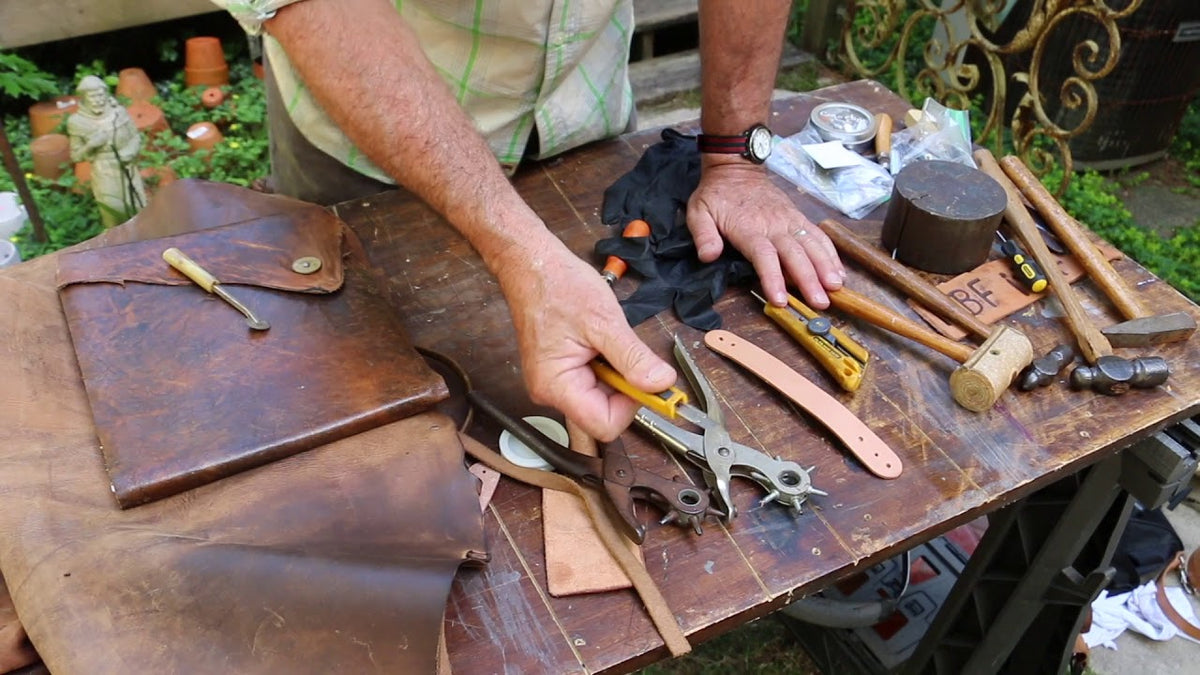
The tools and steps for simple leather bag repairs at home: punching a new strap hole, setting a rivet, slicking an edge, and knowing when to call a pro.
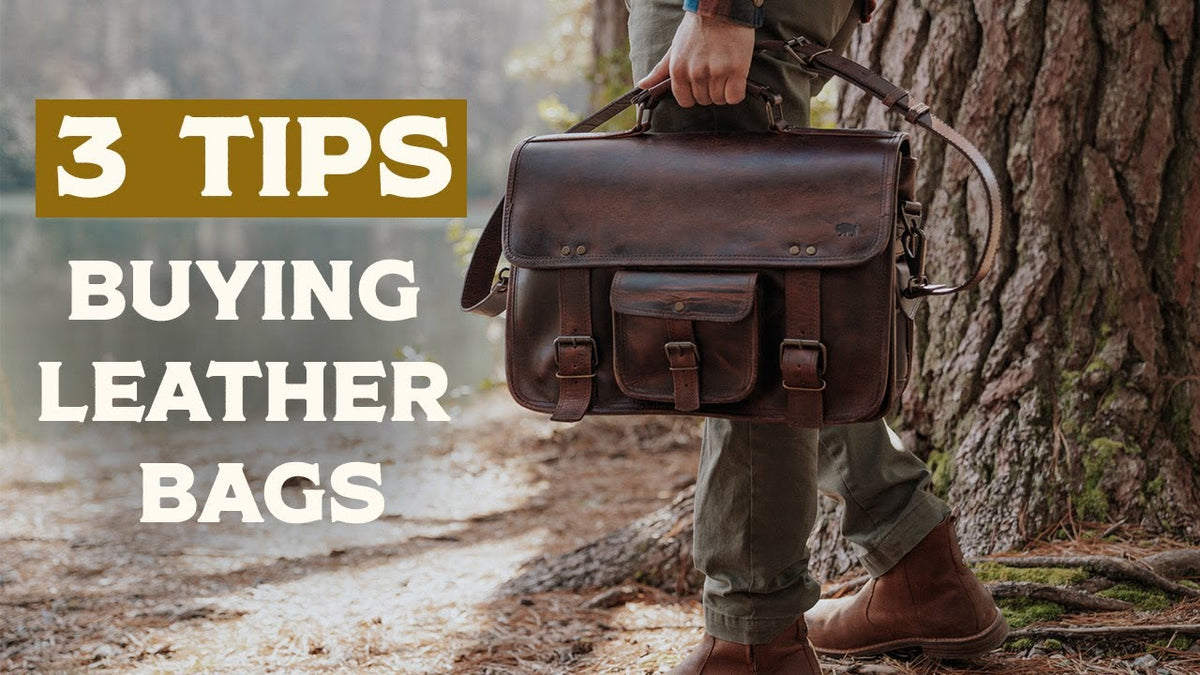
Three things to check before you buy a leather bag: the grade of leather, the hardware, and whether the style fits how you'll use it.
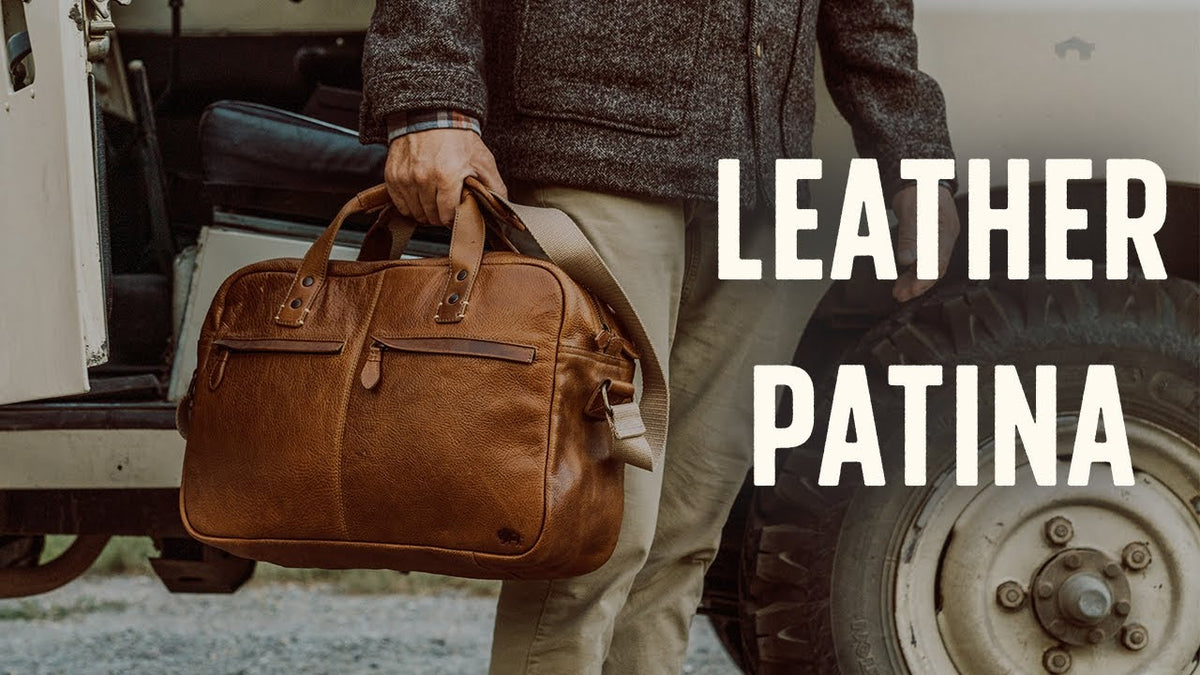
What leather patina is, what causes it, and 6 steps to develop a rich patina on full-grain leather, with our video.