
Close
CART (0)

Buyer's Guide
Check the address bar, then check the price. Almost every fake fails one of those two questions — here is the rest of what to look for, and what the people running these sites are actually doing.
A fake site is almost always an unfamiliar domain selling a known brand's products at a fraction of what the materials cost. Beyond that: no physical address or phone number, a product range that sprawls from leather jackets to phone cases, reviews that all appeared the same week, a checkout that redirects somewhere unexpected.
If the photographs look professional, that means nothing. They were almost certainly taken by the brand being copied.
Every brand that makes something worth owning eventually gets copied. We have spent seventeen years photographing leather in good light, and those photographs now show up on websites we have never heard of, attached to jackets we have never touched.
What follows is not about us. It is about the shape of the thing — how these operations run, what they always get wrong, and how to tell in about ninety seconds whether the site in front of you is real. It applies to any leather or apparel brand you care about, ours included.
If you are checking a listing that claims to be ours specifically, our authorized retailer policy answers that in one line.
They do not make anything. They collect orders. The storefront comes first: a domain, a stock theme, and photography scraped from real brands. There is no inventory behind it. When an order comes in, the operator sends nothing, or forwards it to a small workshop overseas that sews something roughly jacket-shaped out of whatever material is cheapest that week. That is why the package takes four to six weeks and arrives in a plastic mailer with an overseas customs form. It was not shipped to you. It was made after you paid.
One operator runs many storefronts. These sites travel in packs — several domains at once, different names, often the same server and the same customer service scripts. Buyers who dig in after being burned frequently find the site they ordered from is invoiced under a second company name and ships under a third. When a domain collects enough chargebacks to be useless, it is retired and the traffic moves to the next one.
They rent your attention. Almost nobody finds these sites by typing the address. They arrive through a sponsored post or a shopping ad against a brand search. The stolen photograph is the entire product — the only real thing in the transaction, doing all the persuading.
The discount is the mechanism, not a mistake. A $500 jacket listed at $89 is not sloppy pricing. The gap between those numbers is what overrides caution, and the countdown timer exists to prevent the twenty minutes of checking that would sink the sale.
The customer service exists to run out your clock. Replies are polite and slow. They ask for photos of the front, the back, the packaging, the tag. They offer thirty percent back if you keep it, then fifty. They tell you the return address is overseas and shipping is on you, which costs more than the item. None of that is disorganization. It is designed to push you past your card issuer's dispute window, because a chargeback is the only thing that actually costs them money.
Most fakes fail on the first one.
Is it the brand's actual address, a lookalike, or an unrelated store name selling "their" products? This single check settles most cases.
Deep discounts on premium materials are not real. Leather has a floor set by the cost of hides.
A real company has a physical address, a phone number, and named people. Scam sites hide behind a contact form and a free email account.
If leather jackets sit next to phone cases, garden tools, and toys, it is not a brand. It is a dropshipping shell.
Look for years of accumulated reviews, not a wall of five-star entries posted the same week — and check whether they describe the product actually on the page.
Requests for bank transfer, payment apps, or a redirect to an unrelated domain at the payment step are immediate red flags.
Full-grain is the top layer of the hide. The grain varies because it came off an animal, not a roll. It creases where you bend it, warms to the touch, smells like leather, and takes on a patina instead of wearing out.
"Genuine leather," "PU leather," "vegan leather," "leatherette" — bonded, coated, or entirely synthetic. It photographs uniformly, feels cool and plasticky, and smells faintly chemical. A care tag that says machine washable is not leather.
The longer version is in real leather vs. bonded leather and real leather vs. faux leather.
Because they are real photos — just not theirs. Counterfeit storefronts scrape photography directly from the brands they are imitating, including location shoots that cost real money to produce. The image is the most convincing thing on the page precisely because a legitimate company made it. If you reverse image search a product photo and find it on a different, established brand's site, you have your answer.
Because materials have a floor. A full-grain hide costs what it costs before anyone cuts, sews, lines, or ships it. Add real hardware — YKK zippers, solid brass — and real construction, and there is a number below which a jacket cannot honestly be sold. Legitimate brands run sales, but they discount from a real price, on their own website, not to a fifth of it on a domain you have never seen.
The most common substitution is screen printing or heat transfer where the real garment has embroidery or stitched twill. Zoom in on the logo: stitched logos show thread texture and slight relief; printed ones sit flat and often show a faint square edge where the transfer ends. Licensed team and brand merchandise carries specific manufacturer tags and holographic labels — counterfeits either omit them or reproduce them badly.
No. Advertising space is bought, not earned. These operations pay the same ad platforms every real brand does, and they are often outbidding brands on their own names. A sponsored result is a purchase, not a verification. The same goes for the padlock in the address bar — SSL certificates are free and universal, and their presence tells you the connection is encrypted, not that the company is honest.
Only if you read them. Look at the dates: a cluster of glowing reviews posted within a few days of each other, on a site with no history before that, is a purchase. Read the one-star reviews, which are usually the real ones, and see whether the complaints describe a pattern — long delays, wrong sizes, material that is not what was advertised, refunds promised and never sent. Check independent review platforms rather than the testimonials the site displays about itself.
They are built to be temporary. A storefront runs until chargebacks and negative reviews make it unprofitable, a few weeks to a few months, and then the operator retires the domain and opens another under a new name, often on the same server with the same photography. This is why checking the URL matters more than checking reviews: a site with no history is not new and undiscovered. It is new on purpose.
No, and this is the hardest part to hear. A brand can only stand behind what it made and sold. If the purchase happened on a website they do not operate, there is no order record, no way to verify the item, and no ability to process a return or warranty claim. The money has to come back through your card issuer. Our warranty covers products bought directly from buffalojackson.com — same as every brand in this position.
They try, constantly — DMCA takedowns for the stolen photography, trademark complaints, fraud reports to hosts and payment processors. The trouble is arithmetic. A domain costs a few dollars, and operators register them faster than takedowns process. Most storefronts are designed to live only a few weeks anyway. The lasting defense is not enforcement. It is buyers who check the address bar.
Dispute the charge. Contact your credit card issuer or PayPal and file for a fraudulent or counterfeit transaction. Do not wait for the item to arrive or for the seller to reply — the delays are the strategy, and dispute windows are finite.
Decline the partial refund. Being talked into keeping the item for thirty percent back usually forfeits your ability to dispute the rest.
Report it. In the US, report scam retail sites to the FTC at reportfraud.ftc.gov. Also report the ad on the platform where you saw it — that is often the fastest way to cut the storefront off.
Tell the brand whose photos were used. Most brands file takedown requests against every site reported to them, and they usually do not know a domain exists until a customer tells them. If the photographs were ours, send the link to support@buffalojackson.com.
Stolen photograph, rented ad, impossible price, disposable domain, delay until the dispute window closes.
That is the whole machine — and the whole of it collapses the moment you look at where you actually are.
Before you enter a card number anywhere, check the domain against the brand's real one and ask whether the price could possibly cover the materials being described. Those two questions catch almost everything. If a site is using our photographs, I want to know about it — write me.
Xan HoodFounder & CEO, Buffalo Jackson Trading Co.
Matthews, North Carolina

Written by
Xan Hood
Founder and CEO of Buffalo Jackson, a heritage leather goods and outerwear brand started in 2009. Xan leads product development personally and writes about full-grain leather, craftsmanship, and heritage apparel from 17 years of firsthand experience.
More about Xan →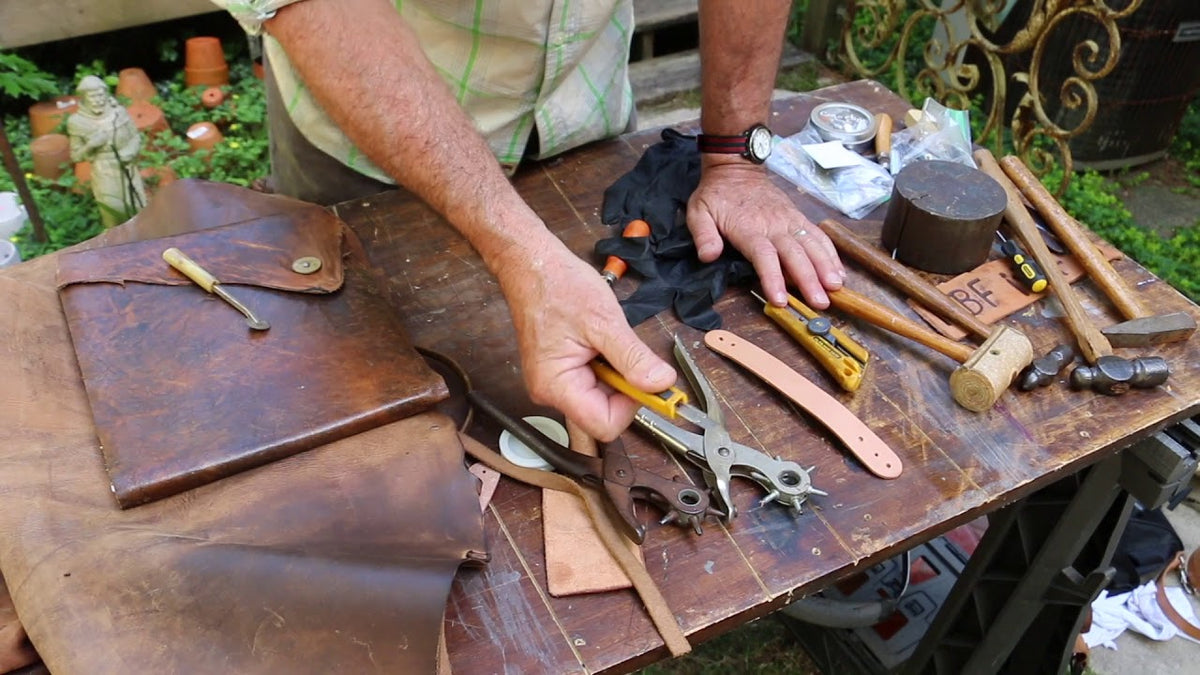
The tools and steps for simple leather bag repairs at home: punching a new strap hole, setting a rivet, slicking an edge, and knowing when to call a pro.
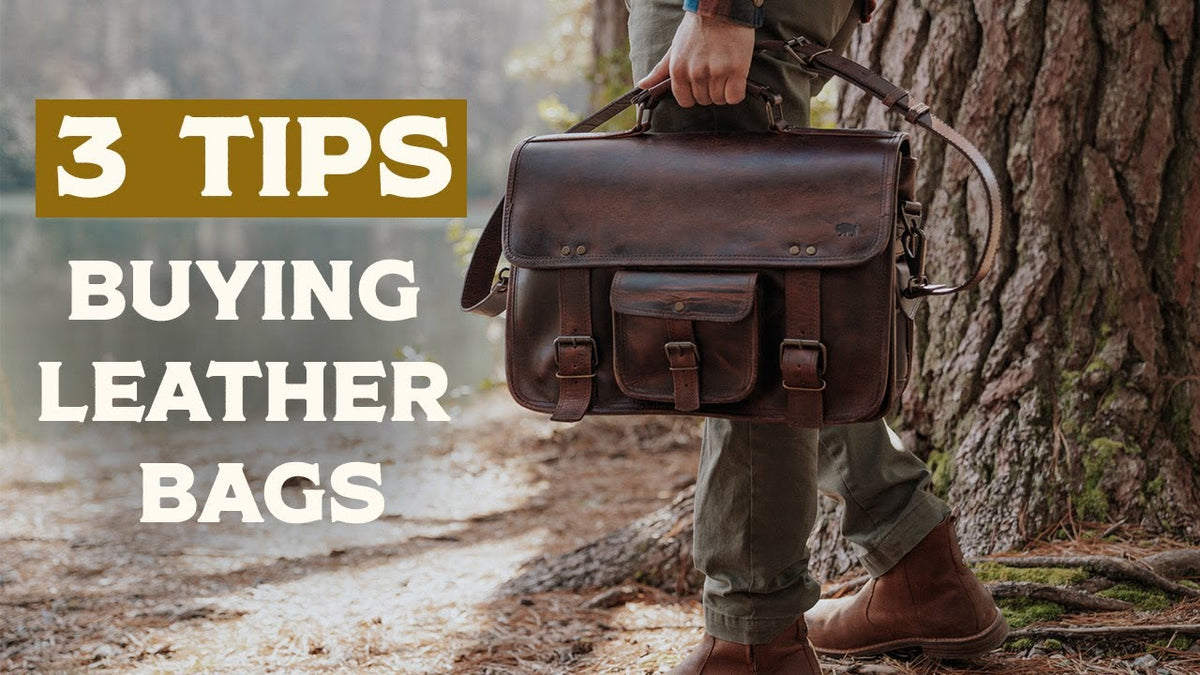
Three things to check before you buy a leather bag: the grade of leather, the hardware, and whether the style fits how you'll use it.
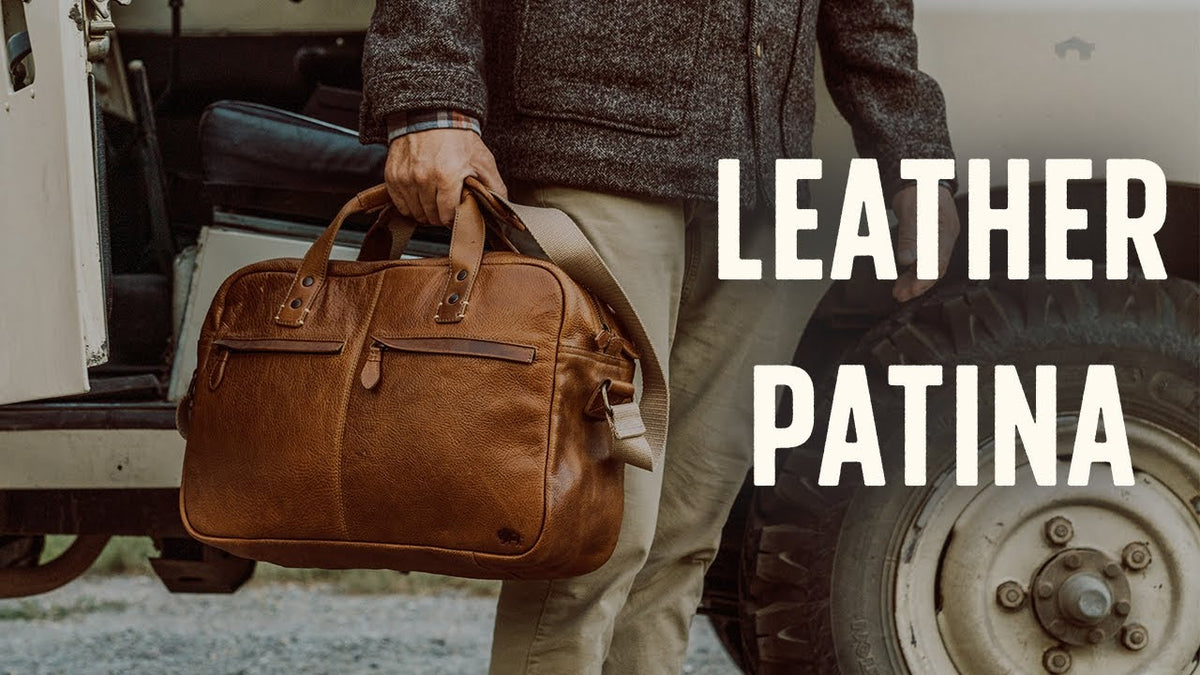
What leather patina is, what causes it, and 6 steps to develop a rich patina on full-grain leather, with our video.